
Topic hub
Price and market structure
Who sets the gold price, where it clears, and how physical demand feeds into it.
There is no single gold price. There is a London over-the-counter market that clears unallocated balances, a twice-daily benchmark auction, a New York futures market that carries most of the speculative flow, and physical premiums in Mumbai, Shanghai and Istanbul that can diverge from all of them for weeks at a time.
This hub explains the market's plumbing and the demand that runs through it, from wedding-season jewellery buying to exchange-traded fund flows.
Start here
Markets · 22 min read
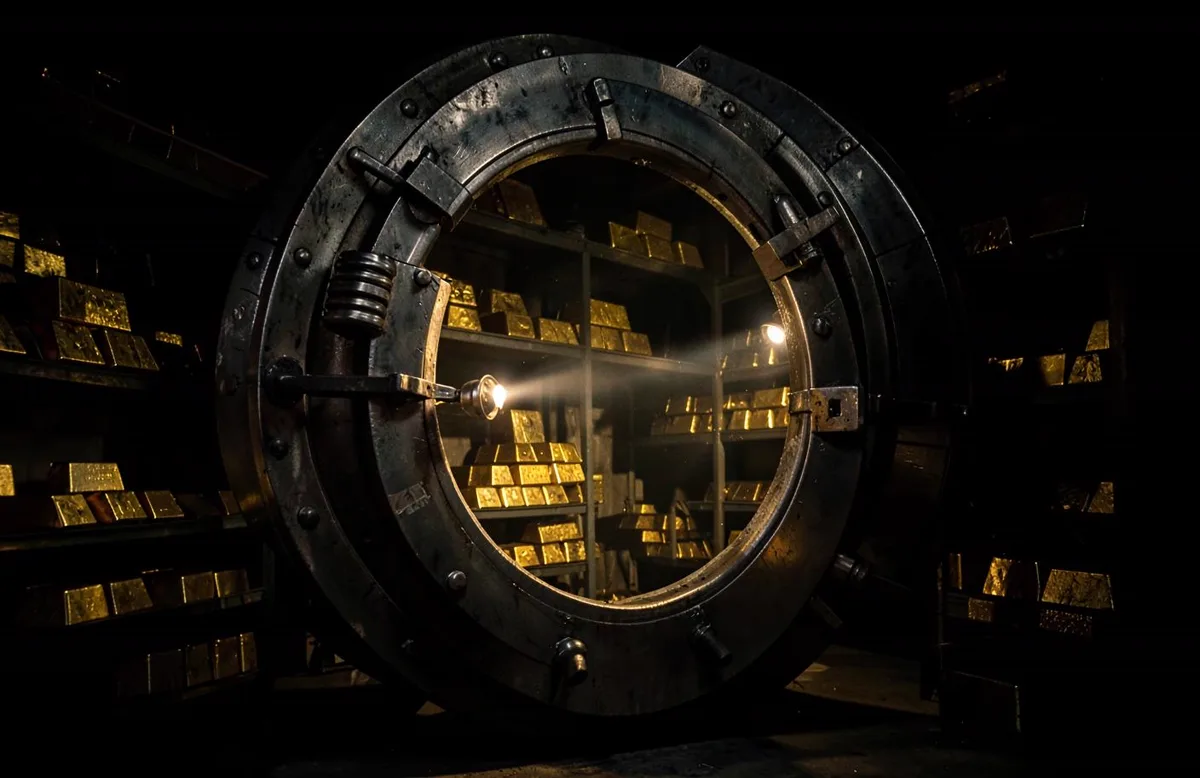
The Last Audit: What We Actually Know About the World's Official Gold
Governments report holding roughly 36,000 tonnes of gold — a figure quoted everywhere and verified almost nowhere. Between the published number and the physical bar sits a chain of certificates, custodians and fifty-year-old count sheets. This is an attempt to walk that chain honestly.
Ingrid Sørensen · 11 September 2026
More on price and market structure
Markets
The Real-Rate Trade: Why Gold Moves When Bond Yields Do
For two decades the gold price could be read off an inflation-linked bond screen. Then, somewhere after 2022, the relationship stopped behaving — and the argument about why has become the most consequential debate in the metal's market.
8 September 2026 · 25 min read
Industry
The Refiner's Ledger
Somewhere between a mine's doré bar and a Good Delivery brick sits a chain of chlorination furnaces, electrolytic cells, assay labs and accreditation committees that decides which gold the world's markets will accept without question — and which gold gets quietly refused.
20 August 2026 · 17 min read
Mining
Nine Grams a Tonne
What does it actually cost to pull an ounce of gold out of the ground? The honest answer runs through grade decline, energy and water bills, permitting delays and the closure liabilities nobody prices until the mine is already exhausted.
19 August 2026 · 18 min read
Markets
The Vault Beneath the City
Beneath the Bank of England and beneath lower Manhattan sit two of the largest concentrations of monetary gold on earth, moved between anonymous compartments by a handful of porters who never touch the metal with bare hands. This is how sovereign gold is actually stored, audited and, occasionally, brought home.
18 August 2026 · 22 min read
Markets
Paper Gold: What You Own When You Do Not Own Bars
Most of the world's gold exposure is a contract, not a metal. Futures, unallocated accounts and exchange-traded funds each promise gold in a different way — and the differences only become visible when the market stops working.
17 August 2026 · 23 min read
Markets
Moving Bullion: The Logistics Nobody Prices
Between the vault and the buyer sits an industry of armoured vehicles, sealed cargo, bonded warehouses and insurance clauses. It rarely makes news, and it is the reason a spot price in London can diverge from a bar in New York.
8 August 2026 · 15 min read
Industry
The Scrap Trade
Roughly a quarter of the world's annual gold supply has been gold before. It arrives as broken chains, single earrings and dental crowns, and it moves through a chain of intermediaries that most sellers never see past the first counter.
6 August 2026 · 16 min read
Markets
Why Central Banks Started Buying Gold Again
For three decades official institutions were net sellers of bullion, and the policy consensus treated the metal as a museum piece. Then, quietly, the world's reserve managers reversed. The reasons are less about inflation than about the plumbing of settlement.
6 August 2026 · 14 min read
Mining
Grade, Cut-off and the Arithmetic of an Open Pit
A gold mine is not a hole with gold in it. It is a spreadsheet with a hole attached — and the single number that decides which rock is ore and which rock is waste moves every time the price does.
5 August 2026 · 20 min read
Industry
The Gold Inside Your Phone
Industrial demand is the quietest third of the gold market: a few tenths of a gram per handset, multiplied by billions of devices, chosen not for prestige but because nothing else conducts as reliably for as long.
4 August 2026 · 18 min read
Craft
The Wedding-Season Bid: How Jewellery Demand Sets the Floor
Half the world's gold is worn, not stored. In India and China that distinction barely exists — and the buying behaviour it produces is the most reliably contrarian force in the entire market.
3 August 2026 · 15 min read
Markets
Who Actually Sets the Gold Price
There is no single gold price. There is a London settlement number, a New York futures curve, a Shanghai premium and a jeweller's counter in Dubai — and the distance between them is where the market lives.
2 August 2026 · 16 min read
Markets
Bring It Home: Central Banks and the Great Gold Repatriation
For half a century it was rational to store your gold in someone else's basement. Then the calculus of counterparty risk changed, and reserve managers started chartering aircraft.
20 June 2026 · 14 min read
Terms used in this topic
- Troy ounce
- The unit gold is priced and traded in, equal to 31.1034768 grams — about 10 percent heavier than the avoirdupois ounce used for groceries. A quoted gold price of $2,400 an ounce always means a troy ounce. The unit descends from the medieval fairs at Troyes in Champagne and survived into modern bullion markets because contracts, refinery bars and assay certificates were all written in it.
- London Bullion Market Association (LBMA)
- The trade body that sets the standards the wholesale gold market runs on. Its Good Delivery List names the refiners whose bars are accepted without re-assay in London vaults, and its Responsible Sourcing programme audits where their metal comes from. The LBMA does not itself trade gold or set the price; it defines the specifications, accreditation and reporting that make anonymous bars fungible between counterparties.
- LBMA Gold Price
- The twice-daily benchmark, set at 10:30 and 15:00 London time through an electronic auction operated by ICE Benchmark Administration. Participants submit buy and sell volumes at a proposed price; the price moves until the imbalance falls within tolerance and the auction settles. Because it produces a single printable number for a fixed moment, it is what miners, refiners, ETFs and central banks write into contracts.
- Allocated vs unallocated gold
- Allocated gold means specific, serial-numbered bars held in your name; the vault is a custodian and the metal is not on its balance sheet, so it survives the custodian's insolvency. Unallocated gold is a claim on a bullion bank for a quantity of fine gold, not on identified bars — cheaper and more liquid, but an unsecured credit exposure. Most wholesale trading clears unallocated; most long-term reserve holding is allocated.
- Contango and backwardation
- Contango is the normal state of the gold futures curve, where forward prices exceed spot by roughly the cost of financing and storing metal. Backwardation, where forward prices sit below spot, signals that someone will pay a premium for metal now — usually a squeeze on physical availability rather than a view on the price. In gold, sustained backwardation is rare and treated as a stress indicator.
- Gold lease rate
- The interest paid to borrow physical gold, historically derived as the difference between dollar interest rates and the gold forward offered rate. Central banks and ETFs lend metal; refiners, miners and jewellery fabricators borrow it to cover the gap between buying feedstock and selling finished product. A spike in lease rates means physical metal has become scarce in a specific location, not that the gold price is rising.
Questions readers ask
- Who sets the gold price?
- No one entity. The reference is the LBMA Gold Price, set twice daily in an electronic auction, but the tradable price at any moment is the London OTC spot quote, arbitraged against COMEX futures.
- Why is gold more expensive in India than the spot price?
- Import duty, GST and local physical premiums. During strong wedding-season demand, dealers pay above the landed cost to secure metal, and the premium widens.
Other topics
- The gold standard
- Central-bank reserves
- Refining and assay
- Mining economics
- Recycling and recovery
- Goldsmithing and craft
- The science of gold
Reported from the Markets desk.