
Topic hub
Central-bank reserves
Official-sector buying, repatriation and the reserve-management logic behind it.
Central banks are the single largest identifiable holders of above-ground gold, and since 2022 they have been net buyers at a pace not seen since the 1960s. The motive is rarely return: gold pays no coupon. It is an asset that carries no counterparty and cannot be frozen by the issuer of another currency.
Our coverage tracks who is buying, how reserves are custodied in London and New York, and why several states have moved metal back onto their own soil.
Start here
Markets · 22 min read
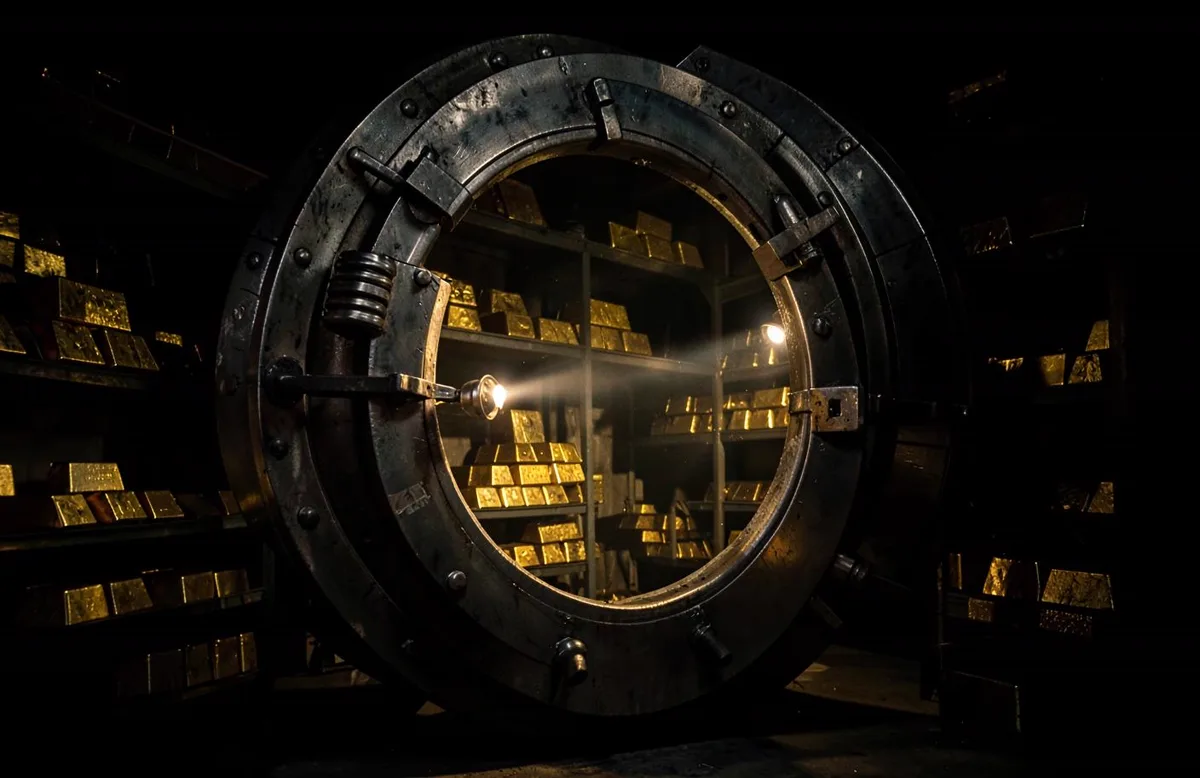
The Last Audit: What We Actually Know About the World's Official Gold
Governments report holding roughly 36,000 tonnes of gold — a figure quoted everywhere and verified almost nowhere. Between the published number and the physical bar sits a chain of certificates, custodians and fifty-year-old count sheets. This is an attempt to walk that chain honestly.
Ingrid Sørensen · 11 September 2026
More on central-bank reserves
Markets
The Real-Rate Trade: Why Gold Moves When Bond Yields Do
For two decades the gold price could be read off an inflation-linked bond screen. Then, somewhere after 2022, the relationship stopped behaving — and the argument about why has become the most consequential debate in the metal's market.
8 September 2026 · 25 min read
Markets
The Vault Beneath the City
Beneath the Bank of England and beneath lower Manhattan sit two of the largest concentrations of monetary gold on earth, moved between anonymous compartments by a handful of porters who never touch the metal with bare hands. This is how sovereign gold is actually stored, audited and, occasionally, brought home.
18 August 2026 · 22 min read
Markets
Why Central Banks Started Buying Gold Again
For three decades official institutions were net sellers of bullion, and the policy consensus treated the metal as a museum piece. Then, quietly, the world's reserve managers reversed. The reasons are less about inflation than about the plumbing of settlement.
6 August 2026 · 14 min read
Mining
Grade, Cut-off and the Arithmetic of an Open Pit
A gold mine is not a hole with gold in it. It is a spreadsheet with a hole attached — and the single number that decides which rock is ore and which rock is waste moves every time the price does.
5 August 2026 · 20 min read
Markets
Bring It Home: Central Banks and the Great Gold Repatriation
For half a century it was rational to store your gold in someone else's basement. Then the calculus of counterparty risk changed, and reserve managers started chartering aircraft.
20 June 2026 · 14 min read
Terms used in this topic
- Good Delivery bar
- The wholesale unit of the London market: a bar of roughly 400 troy ounces (about 12.4 kg) at minimum 995 fineness, carrying the stamp of an accredited refiner, a serial number, the year of manufacture and the assayed fineness. Weight is variable rather than fixed, so bars are traded on their actual fine gold content. A bar that leaves the vault chain of custody must be re-assayed before it is accepted back.
- Allocated vs unallocated gold
- Allocated gold means specific, serial-numbered bars held in your name; the vault is a custodian and the metal is not on its balance sheet, so it survives the custodian's insolvency. Unallocated gold is a claim on a bullion bank for a quantity of fine gold, not on identified bars — cheaper and more liquid, but an unsecured credit exposure. Most wholesale trading clears unallocated; most long-term reserve holding is allocated.
- Central bank reserve gold
- Gold held by a monetary authority as a foreign reserve asset. It carries no counterparty and no currency of issue, which is why it is bought most heavily by central banks seeking to reduce exposure to any single sovereign. Holdings are reported monthly to the IMF, usually valued at market price, and are often stored abroad — a large share of the world's reserve gold sits in New York, London and Basel rather than at home.
Questions readers ask
- Why do central banks hold gold?
- Because it is a reserve asset with no issuer and no counterparty risk. It diversifies away from the currencies of other sovereigns and remains usable as collateral in a crisis, which is why holdings rose sharply after reserve assets were frozen in 2022.
- Where is central-bank gold stored?
- Predominantly in the Bank of England's London vaults and the Federal Reserve Bank of New York, plus domestic vaults. London holdings sit inside the loco London clearing system, which is why bars must meet Good Delivery specification.
Other topics
- The gold standard
- Refining and assay
- Mining economics
- Recycling and recovery
- Price and market structure
- Goldsmithing and craft
- The science of gold
Reported from the Markets desk.