Skip to content

The Mining Desk

Extraction, artisanal supply and its costs

Deep shafts and hand-dug pits: grades, mercury amalgamation, formalisation schemes and the people at the bottom of the supply chain.

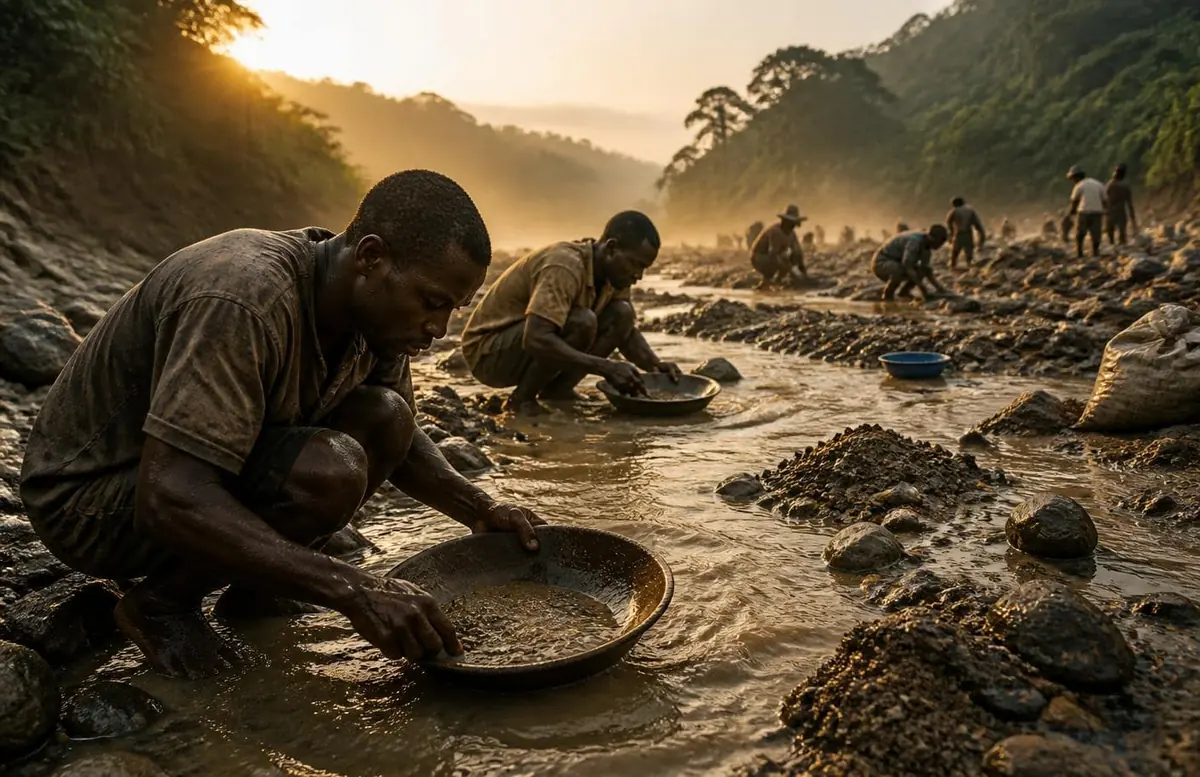
About a fifth of the world's newly mined gold comes out of the ground by hand, produced by millions of people working outside formal permitting systems.

This desk reports the extraction economy at both ends — industrial shafts and hand-dug pits — including the mercury exposure, the buying networks and the formalisation policies that mostly have not worked.

Filter the archive by Mining
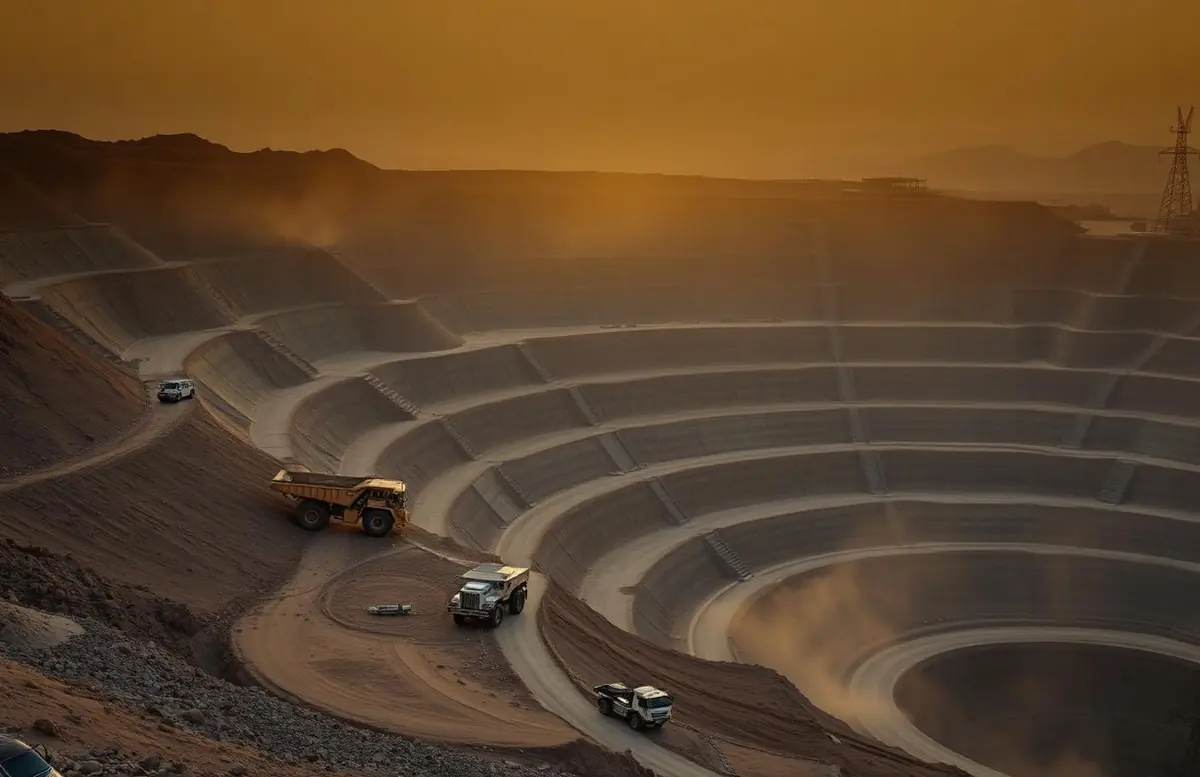
Terraced benches of a large open-pit gold mine at dusk with haul trucks on the ramp

Mine Economics

Grade, Cut-off and the Arithmetic of an Open Pit

A gold mine is not a hole with gold in it. It is a spreadsheet with a hole attached — and the single number that decides which rock is ore and which rock is waste moves every time the price does.

5 August 2026 · 16 min read

Answers

Questions readers ask this desk

What counts as artisanal and small-scale gold mining?
Labour-intensive extraction with minimal mechanisation, usually informal or unpermitted. ASGM employs an estimated 15 to 20 million people and supplies roughly a fifth of global mine output.
Why is mercury used, and why is that a problem?
Mercury amalgamates gold cheaply with no capital equipment. It is also the largest single source of anthropogenic mercury emissions, poisoning miners, downstream fisheries and the children of both.
What is a good ore grade?
Modern open-pit operations mine grades around 1 gram per tonne; underground operations typically need several grams per tonne to justify development. Cut-off grade is an economic decision, not a geological one.

Other desks