Markets & Policy
Bring It Home: Central Banks and the Great Gold Repatriation
For half a century it was rational to store your gold in someone else's basement. Then the calculus of counterparty risk changed, and reserve managers started chartering aircraft.

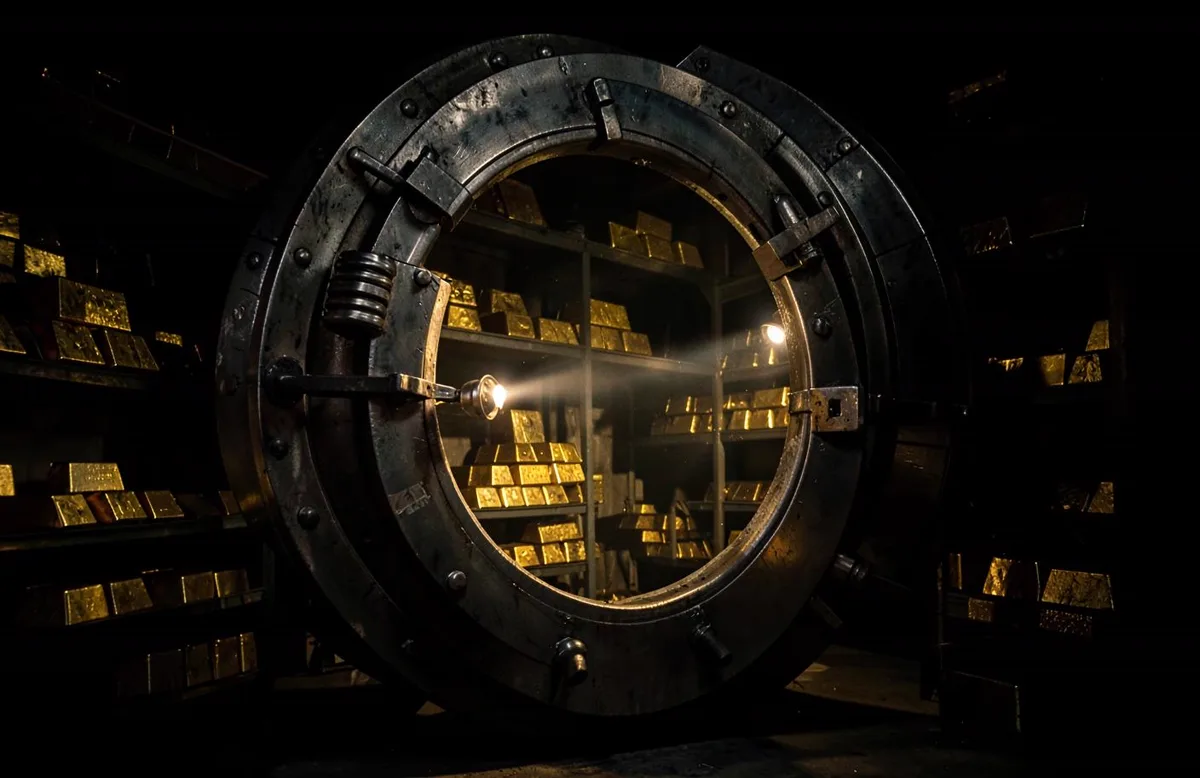
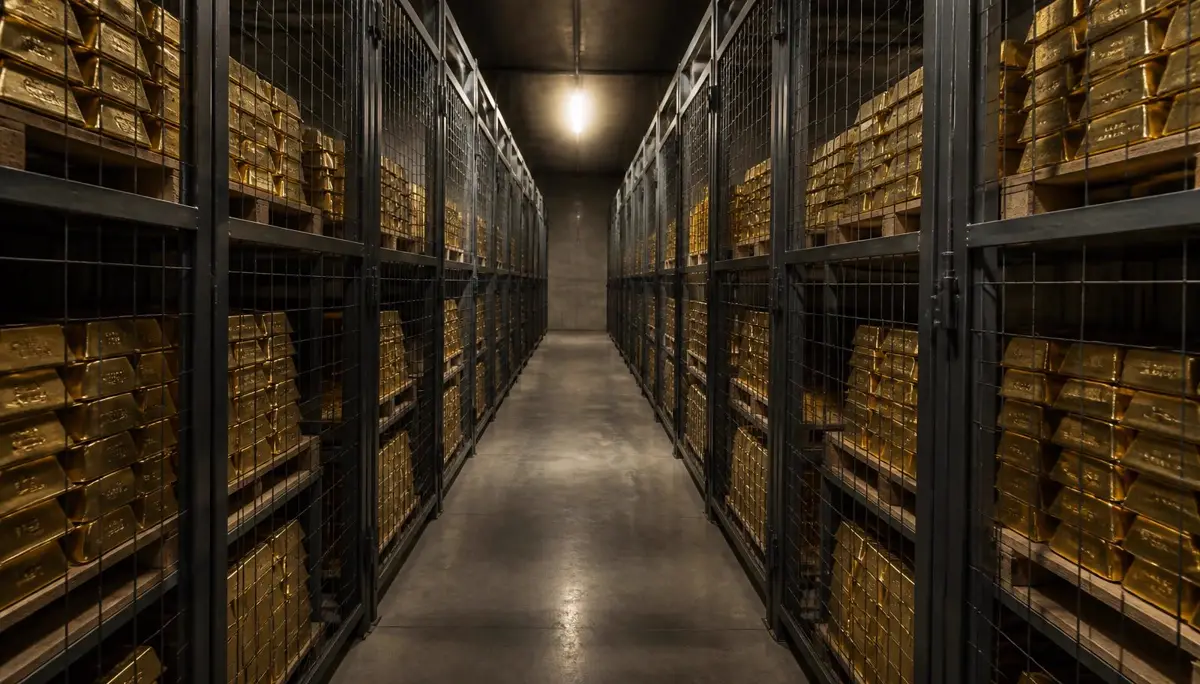
The logistics of moving gold are unglamorous and unforgiving. A Good Delivery bar weighs about twelve and a half kilograms, and a hundred tonnes of them is eight thousand bars — a volume that would fit comfortably in a modest living room and a mass that will destroy the floor of most buildings. Move that quantity across a border and you are dealing with armoured transport, aviation weight limits, insurance underwriters and, at each end, a vault that has to be prepared to receive it.
Central banks have nonetheless been doing exactly this. Over the past decade a steady procession of reserve managers has repatriated metal that had sat abroad, in some cases since the 1950s. The Bundesbank's multi-year programme to bring holdings back from Paris and New York was the most publicised; it was not the first and has not been the last.
Why the gold was abroad
The offshore arrangement was not carelessness. It was the product of two rational calculations, one strategic and one commercial.
The strategic case was geographic. A European central bank in 1955 considering where its reserves would be safest in the event of war did not conclude 'in the likely theatre of that war'. Gold in New York was gold that would still be accessible if the continent were overrun. This logic outlived the circumstances that produced it, largely because moving gold is expensive and nobody had a pressing reason to.
The commercial case was liquidity. Gold in an accredited London vault is loco London gold — it can be sold, lent into the leasing market, or pledged in a swap by book entry, without a truck ever moving. Gold in a domestic vault a thousand miles from the settlement system must be shipped, re-assayed if its bars are not Good Delivery, and re-entered into the chain of custody before it can do anything at all.
What changed
The shift is often narrated as a loss of trust in custodians, and reserve managers are consistently careful to deny this. The denial is credible: no major custodian has failed to deliver. What changed is not the reliability of the vault operator but the visibility of a different risk — that reserves held within another jurisdiction are subject to that jurisdiction's politics.
The immobilisation of a major state's foreign exchange reserves demonstrated, in a way no white paper could, that a reserve asset held as a claim on a foreign institution is a conditional asset. The condition may never be invoked. But a reserve exists precisely for the scenario in which everything else has gone wrong, and an asset that works except in that scenario is not doing the job.
“We are not questioning anybody's integrity. We are observing that a bar in our own vault requires nobody's permission.”
Domestic politics supplied a second driver. Campaigns demanding physical verification of national gold — in Germany, the Netherlands, Switzerland and elsewhere — put central banks under pressure to demonstrate that the metal existed and was identifiable. Publishing a bar list, complete with serial numbers and weights, went from unthinkable to routine in about a decade.
~12.4 kg
Weight of a Good Delivery bar
995.0
Minimum fineness for Good Delivery
400 oz
Nominal bar size, wholesale market
Nobody's liability
Gold's defining reserve property
The costs nobody advertises
Repatriation is not free, and the bill arrives in several currencies.
- Vault capacity. Purpose-built high-security storage with adequate floor loading takes years to design and build, and its construction is itself sensitive information.
- Transport and insurance. Metal in transit is the single most exposed moment in its life, and underwriters price accordingly. Shipments are typically split across many movements.
- Audit and verification. Bars returning from long-term storage may be re-weighed and re-assayed; some older bars fall short of current Good Delivery standards and are recast, at cost.
- Lost optionality. Metal at home cannot be mobilised into the London market at short notice, which matters if the reserve is ever intended to be used rather than merely held.
That last point is the sharpest internal argument against repatriation, and it explains why most programmes are partial. The common pattern is a split: a working tranche left loco London for liquidity, a strategic tranche brought home for sovereignty. The ratio is a policy judgement about which risk you fear more.
Repatriation meets accumulation
Repatriation alone moves metal without changing who owns it. Its market significance comes from coinciding with a second trend: sustained official-sector buying. Central banks that were net sellers through the 1990s and 2000s have been net buyers for years, and the buying has been concentrated among reserve managers diversifying away from a small set of reserve currencies.
Combine the two and the effect on the market's plumbing is real. Metal purchased by a central bank and moved into a domestic vault is, for practical purposes, removed from the deliverable float. It will not be lent into the leasing market. It will not be sold into a rally. The pool of bars available to settle wholesale obligations grows more slowly than the total above-ground stock suggests.
Second-order effects
For the London market, the drift of metal out of the system is a slow structural pressure rather than an acute problem. Lease rates become more volatile. Occasional squeezes appear in the physical market when large deliveries are demanded. The market adapts — as it did during earlier episodes when metal moved between vaults and time zones — but the adaptation shows up as friction in prices.
For the repatriating states, the effect is partly symbolic and deliberately so. A televised arrival of bars at a national vault is a statement about monetary sovereignty aimed at a domestic audience. That does not make it irrational. Reserves are held for confidence, and confidence has a public-facing component.
The direction of travel
It is unlikely that the trend reverses soon. The conditions that made offshore custody obviously sensible — a bipolar security order, unquestioned convertibility of reserve claims, and a settlement system nobody expected to be weaponised — have all weakened. Reserve managers are conservative people who move slowly, and slow movement in one direction over a decade adds up.
What repatriation ultimately reflects is a re-reading of what a reserve is for. Through the long expansion after Bretton Woods, reserves were working capital: liquid, mobile, earning a return. In a more fragmented order they are increasingly understood as insurance, and insurance is judged by whether it pays out in the worst case. On that test, a bar you can walk down and touch outperforms a claim you have to ask for.
The operational cost of holding metal at home
Repatriation is not free, and the costs are the reason it was uncommon for decades. A central bank that brings its gold home needs vault capacity built to a specification most finance ministries have never had to procure, a security apparatus, an audit regime, and insurance — and it accepts that the metal is no longer sitting where it could be transacted in an afternoon.
That last point is the real trade-off. Reserves in a market-centre vault can be lent into the leasing market, used as collateral, or swapped for dollars in a liquidity squeeze without a single bar moving. Metal in a domestic vault must be shipped before it can do any of that, which in a genuine crisis is precisely when shipping is hardest and insurance most expensive.
Reading the announcements
Repatriation programmes are communicated carefully, and the wording is usually more revealing than the tonnage. Three framings recur, and they imply different things.
- Audit and transparency — presented as verification of holdings, typically in response to domestic political pressure rather than geopolitical concern.
- Reserve management — a rebalancing between vault locations described in technical terms, which is how a bank signals prudence without naming a counterparty risk.
- Sovereignty — explicit language about national control, which is the framing used when the intended audience is domestic and the message is political.
Sanctions changed the analytical backdrop for all three. The freezing of a major central bank's foreign reserves demonstrated that custody in another jurisdiction is a policy variable, not a technicality, and reserve managers who had treated location as an operational detail began treating it as a risk exposure with a name.
How a bar actually gets home
Repatriation announcements tend to compress years of logistics into a single press release. The reality behind the headline is a multi-year project run more like a military deployment than a treasury operation: chartered, insured flights carrying a fraction of the total tonnage at a time, routes and schedules kept confidential until the metal has landed, and a receiving vault that has often been under construction or refit for years before the first pallet arrives.
The Bundesbank's own repatriation programme, run in stages from 2013 to 2017, is instructive precisely because it was unusually transparent about its own slowness. Moving roughly 700 tonnes back from Paris and New York took the better part of four years, not because the flights themselves were difficult but because every consignment had to be verified, weighed and, in many cases, re-melted and recast to bring older bars into line with current Good Delivery specifications before it could be logged into the domestic vault's records.
The recasting problem
A surprising share of the friction in any repatriation programme has nothing to do with security and everything to do with paperwork that has not kept pace with metallurgical standards. Bars cast decades ago under older assay conventions sometimes fall outside current minimum fineness or dimensional tolerances, or their documentation trail has gaps that a modern auditor will not accept. Rather than argue the point bar by bar, most programmes simply melt and recast the affected metal to current specification, which restores its market fungibility but adds cost, time and, ironically, a queue at the same class of refinery this magazine has covered elsewhere.
- Confidential routing and staggered shipments to avoid concentrating risk in a single flight or vessel.
- Independent verification on arrival: weight, visual inspection and, for older bars, referee assay.
- Recasting of bars that no longer meet current Good Delivery dimensional or fineness standards.
- Reconciliation against decades-old ledgers, some of which predate modern electronic record-keeping entirely.
Who else has moved gold, and why the reasons differ
Germany's programme drew the most press attention, but it was neither the first nor the largest in relative terms. The Netherlands quietly moved a substantial tranche of reserves from New York to Amsterdam in 2014, citing a wish to have a more balanced distribution between vault locations rather than any single dominant risk. Poland and Hungary, both rebuilding reserve positions from a low base after decades of minimal gold holdings, opted to bring newly purchased metal home rather than book it loco London in the first place — sidestepping the repatriation problem entirely by never letting the gold leave.
That distinction — repatriating existing holdings versus simply choosing domestic storage for new purchases — is worth separating out, because the two carry very different signals. A country moving decades-old reserves is making a statement about accumulated risk it has decided to unwind. A country storing new purchases at home from the outset is making a simpler statement: that it never saw the case for offshore custody to begin with, a position increasingly common among reserve managers who came to gold buying after the custody debate had already shifted.
“We did not repatriate anything. We simply decided that the next tonne we bought would stay here, and so would the one after that.”
The vault-building boom that nobody markets
One quiet consequence of the repatriation trend is a construction boom in high-security storage that almost never appears in gold-market commentary, because vault projects are, by design, some of the least publicised capital projects a state undertakes. Specifications are demanding in ways that have nothing to do with aesthetics: floor loading capable of supporting racked bullion at densities most commercial buildings are never designed for, redundant power and access control, and physical separation from any structure whose failure — fire, flood, structural collapse — could compromise the vault itself.
Lead times run into years even before construction starts, because sites have to be selected for seismic stability, proximity to (but not co-location with) transport infrastructure, and a security perimeter that can be maintained discreetly. Several of the states currently expanding reserves have had to solve this problem essentially from scratch, having decommissioned or never built vault capacity of this kind since the immediate post-war period.
2013–2017
Duration of the Bundesbank's staged repatriation programme
~700 t
Approximate tonnage the Bundesbank moved home
2014
Year the Netherlands relocated reserves from New York to Amsterdam
Years, not months
Typical lead time to build compliant domestic vault capacity
A short history of reserve gold since Bretton Woods
The custody arrangements that repatriation now unwinds were built in a specific historical moment and have simply outlasted it. In the decades after the Second World War, a large share of European central bank gold sat in the vaults of the Federal Reserve Bank of New York and the Bank of England, placed there partly by wartime necessity — several governments shipped reserves across the Atlantic specifically to keep them out of reach of invading forces — and partly because postwar Europe's own vault infrastructure had been damaged, defunded or simply never rebuilt to the scale its reserves required.
For the following half-century, nobody had a pressing reason to move the metal. The Bretton Woods system and its successor arrangements ran through New York and London as a matter of course, the Cold War made a European vault feel no safer than an American one, and moving hundreds of tonnes of gold is expensive enough that inertia was the rational default. The reserves simply sat, audited periodically, largely unquestioned, for two generations.
The first serious challenge to the status quo
Domestic political pressure, more than any market event, broke that inertia. Grassroots campaigns in Germany and elsewhere during the early 2010s demanded physical verification of national gold holdings, driven by a mix of genuine transparency concerns and a broader post-financial-crisis scepticism of institutions. Central banks that had treated the location of their gold as a settled operational detail found themselves fielding parliamentary questions about it, and the Bundesbank's decision to publish a full bar list and commit to a phased repatriation followed directly from that pressure rather than from any assessment that its custodians had failed.
What followed was less a single trend than two overlapping ones running on different clocks: a domestic-transparency wave through the 2010s, followed by a geopolitical-risk wave from the early 2020s onward that reframed the same question in starker terms, once the freezing of a major state's foreign reserves showed exactly what a claim on gold held in another jurisdiction could become in a crisis.
The opportunity-cost argument, and why reserve managers reject it
The standard economic critique of holding large non-yielding gold reserves is straightforward: a treasury bond pays interest, a bank deposit pays interest, and gold pays nothing while costing money to store and insure. Critics of official-sector gold buying — and there is a respectable body of central-bank research making this case — argue that the opportunity cost of holding, say, several hundred tonnes of non-yielding metal instead of interest-bearing reserve assets is a real and measurable drag that reserve managers rarely quantify publicly.
Reserve managers do not dispute the arithmetic; they dispute the framing. A yield is only worth having if the asset paying it survives the scenario you are actually insuring against, and a reserve manager's job is explicitly to plan for scenarios in which interest-bearing claims on other governments or institutions might not be honoured in full or on time. Gold's zero yield is, in this reading, simply the premium paid for an asset that does not carry that risk — no different in kind from paying an insurance premium on an asset you hope never to need.
“Ask a reserve manager what yield gold pays and you have asked the wrong question. Ask what it pays in the one scenario every other reserve asset fails, and the answer is everything.”
This disagreement is not going to be resolved by more data, because it is fundamentally a disagreement about how to price a scenario that has not yet happened at scale for most holders. What has shifted the balance of the argument in gold's favour over the past two decades is simply that the tail scenario — sanctions, asset freezes, a reserve currency issuer using its own currency's plumbing as a policy weapon — has moved from theoretical to demonstrated, at least once, for at least one major reserve holder.
What to watch: de-dollarisation and digital reserve gold
Two forward-looking developments deserve more attention than they currently receive in gold-market commentary. The first is the slow, uneven push by several blocs of emerging economies to reduce their collective dependence on a single reserve currency for trade settlement — a project usually discussed in terms of alternative payment systems and bilateral currency arrangements, but one in which gold repeatedly surfaces as a proposed common reference or settlement asset precisely because it is acceptable to parties who trust neither each other's currencies nor a third country's.
None of these proposals has produced anything resembling a working multilateral gold-settlement mechanism, and the practical obstacles — agreeing a valuation methodology, building the custodial and transport infrastructure, and trusting a shared clearing arrangement among states that do not otherwise trust each other — are the same obstacles that have defeated gold-based settlement schemes for a century. The second development is more technically concrete: several central banks and monetary authorities have begun exploring digitally represented claims on official gold holdings, mirroring the tokenisation experiments under way in the private sector, as a way of making reserve gold operationally usable without moving a single bar.
2010s
Decade of the domestic-transparency wave in reserve gold audits
2020s
Decade of the geopolitical-risk reframing of custody location
Zero
Nominal yield paid on physical gold reserves
Decades
Typical lifespan of a custody arrangement once established
Frequently asked
Questions readers ask
- Why did central banks store gold abroad in the first place?
- Proximity to trading and settlement centres. Gold held at the Bank of England or the New York Fed could be lent, swapped or sold without physical transport, and during the Cold War it was safer outside the likely path of an invasion.
- What does 'loco London' mean?
- It designates gold held in accredited London vaults, the default location for wholesale settlement. A loco London price is a price for metal deliverable there, which is why bars in that system carry a liquidity premium.
- Does repatriation affect the gold price?
- Not directly, since ownership does not change. The indirect effect is on the free float: metal moved into domestic vaults for reserve purposes is unlikely to be lent or sold, which tightens the pool of readily deliverable bars.
- Why do central banks store gold abroad at all?
- Because reserves held in London or New York can be mobilised — lent, swapped or sold — without physically moving anything, and because those vaults sit at the centre of the wholesale market. Metal at home is safer politically and far less useful operationally.
- Does repatriation change the total supply of gold?
- No. It relocates existing metal between vaults. Its market significance is informational: it signals how a central bank now weighs jurisdictional risk against liquidity, and it removes those bars from the pool available for lending and swaps.
- Why do central banks hold gold at all, given it pays no interest?
- Because the properties that make it pay no interest are the same properties that make it valuable as insurance: it is nobody's liability, cannot be frozen by another government's decision, and does not depend on any institution's continued solvency. Reserve managers accept the opportunity cost as the price of an asset that performs precisely when other reserve assets are most likely to fail.
- Which countries have bought the most gold in recent years?
- Official-sector buying has been led by a mix of emerging-market central banks diversifying reserves that were previously concentrated in a small number of currencies, alongside several European reserve managers rebuilding positions from historically low bases. Exact rankings shift year to year and are reported with a lag, since not every purchase is disclosed promptly.
- Could a country ever run out of vault space for repatriated gold?
- In principle, though it would take an extraordinary accumulation to reach that point. The binding constraint in practice is not floor area but the years-long lead time to design, certify and build a vault to the load-bearing, security and access-control specifications the metal requires — which is why most repatriation programmes are phased over years rather than executed in a single shipment.