
Topic hub
Recycling and recovery
Scrap jewellery, electronic waste and the second supply chain that never leaves the surface.
Roughly a quarter of annual gold supply has been mined before. It comes back as scrap jewellery when the price rises, and as circuit boards, connectors and bonding wire from the electronics stream. Recovery from e-waste is chemically harder and economically thinner than the headlines suggest, but the concentration in a tonne of boards can exceed the concentration in a tonne of ore.
This hub follows the metal on the way back: collection, refining margins, and the difference between a legitimate recovery operation and a hazardous one.
Start here
Industry · 16 min read
The Scrap Trade
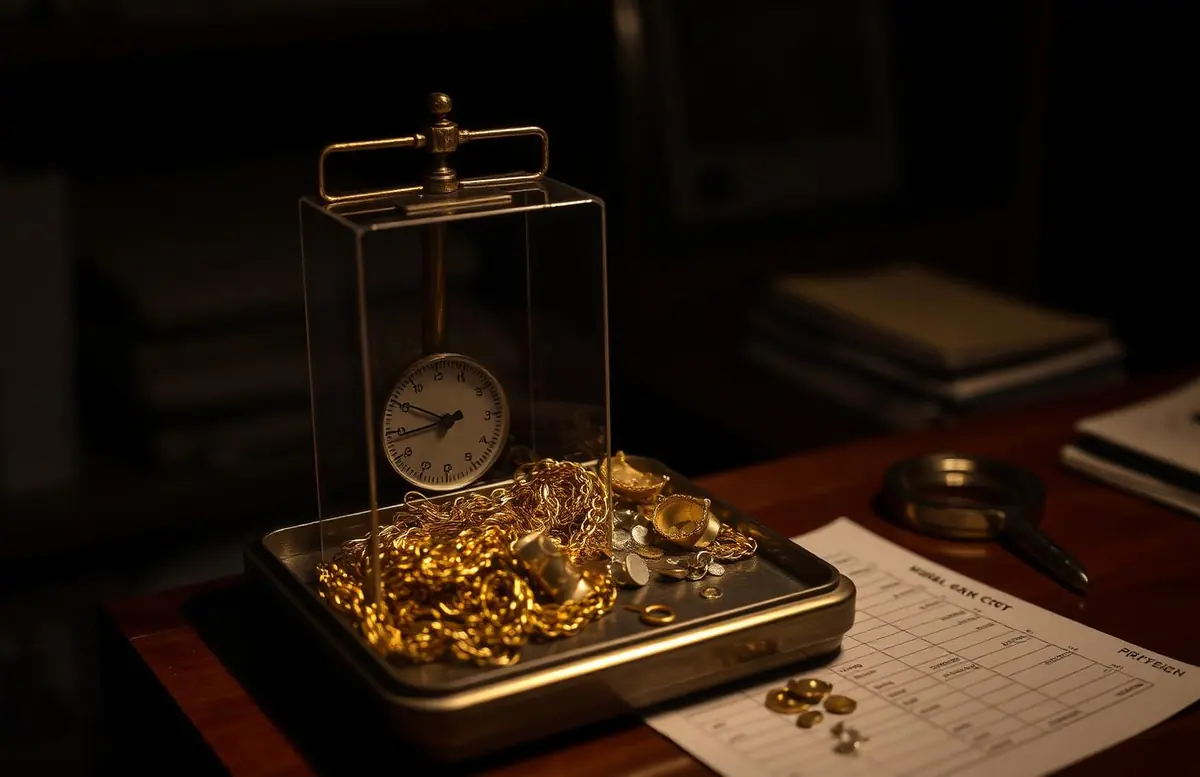
Roughly a quarter of the world's annual gold supply has been gold before. It arrives as broken chains, single earrings and dental crowns, and it moves through a chain of intermediaries that most sellers never see past the first counter.
Ingrid Sørensen · 6 August 2026
More on recycling and recovery
Industry
The Gold Inside Your Phone
Industrial demand is the quietest third of the gold market: a few tenths of a gram per handset, multiplied by billions of devices, chosen not for prestige but because nothing else conducts as reliably for as long.
4 August 2026 · 18 min read
Industry
Urban Mining: The Richest Gold Ore on Earth Is in Your Old Phone
A tonne of good underground ore holds a few grams of gold. A tonne of discarded circuit boards can hold two hundred. So why is most of it still going into landfill?
28 July 2026 · 16 min read
Terms used in this topic
- Fineness
- Gold purity expressed in parts per thousand. 999.9 fineness — 'four nines' — is 99.99 percent gold, the standard for investment bars and coins. 995 is the London Good Delivery minimum. Fineness is the wholesale market's language because it is a direct mass fraction, unlike karat, which expresses the same idea in twenty-fourths and is used in jewellery.
- Doré
- The impure alloy a mine pours on site, typically somewhere between 60 and 90 percent gold with silver and base metals making up the rest. Doré bars are not tradable bullion; they are feedstock, shipped under insurance to an accredited refiner where they are assayed and settled on contained fine gold. The step from doré to Good Delivery bar is where the mining industry ends and the bullion market begins.
- Urban mining
- Recovering gold from discarded electronics rather than ore. A tonne of circuit boards can carry a hundred times the gold of a tonne of typical ore, concentrated in connectors, bonding wire and plating. The constraint is not chemistry but logistics and safety: collecting, sorting and de-soldering mixed waste without releasing brominated flame retardants or heavy metals is what determines whether recovery is economic.
- Recycled gold
- Gold returned to the refining stream from jewellery, industrial residues and investment bars, supplying roughly a quarter to a third of annual demand. Supply is strongly price-elastic: when the price rallies, scrap flows to the counters within weeks, which makes recycling a natural brake on price spikes. Once refined, recycled gold is chemically identical to newly mined metal and cannot be distinguished by assay.
Questions readers ask
- How much gold is in a mobile phone?
- Roughly 20 to 30 milligrams — worth a couple of dollars at current prices. The economics only work at scale, on aggregated boards, in a permitted refinery.
- Is recycled gold the same as mined gold?
- Chemically identical once refined to the same fineness. The difference is provenance documentation, which matters for responsible-sourcing schemes rather than for the metal's properties.
Other topics
- The gold standard
- Central-bank reserves
- Refining and assay
- Mining economics
- Price and market structure
- Goldsmithing and craft
- The science of gold
Reported from the Industry desk.