Recycling
The Scrap Trade
Roughly a quarter of the world's annual gold supply has been gold before. It arrives as broken chains, single earrings and dental crowns, and it moves through a chain of intermediaries that most sellers never see past the first counter.
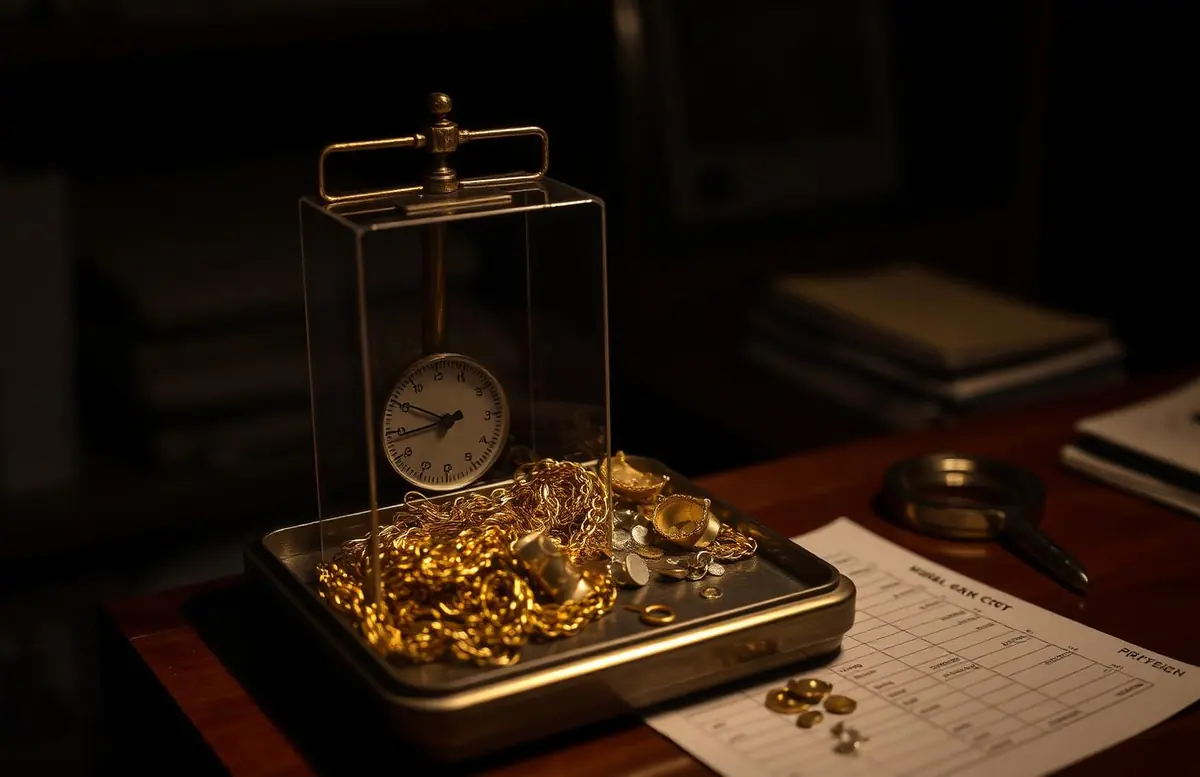
The gold market's supply side is usually discussed as though it consisted of mines. It does not. In most years, somewhere between a quarter and a third of the metal reaching the market has been gold before — jewellery bought in another decade, industrial residues, coins, dental work — recovered, refined and returned to circulation. It is the only large source of supply that can respond to a price move within weeks rather than within a decade of permitting and construction.
That responsiveness is the single most important fact about the scrap trade. A mine's output is set by a plan drawn up years earlier. Recycled supply is set by how many people in Istanbul, Mumbai, Milan and Manchester decide this month that the price is high enough to open a drawer.
The chain, counter to bar
Most sellers see only the first link. Behind it is a consolidation chain that exists because refining has a minimum efficient scale that a shopfront cannot reach.
- The counter: a jeweller, pawnbroker or dedicated gold buyer testing and weighing small lots, paying cash, holding inventory for days.
- The consolidator: buying accumulated lots from many counters, doing a more careful assay, sorting by karat and by whether the item is worth more intact than melted.
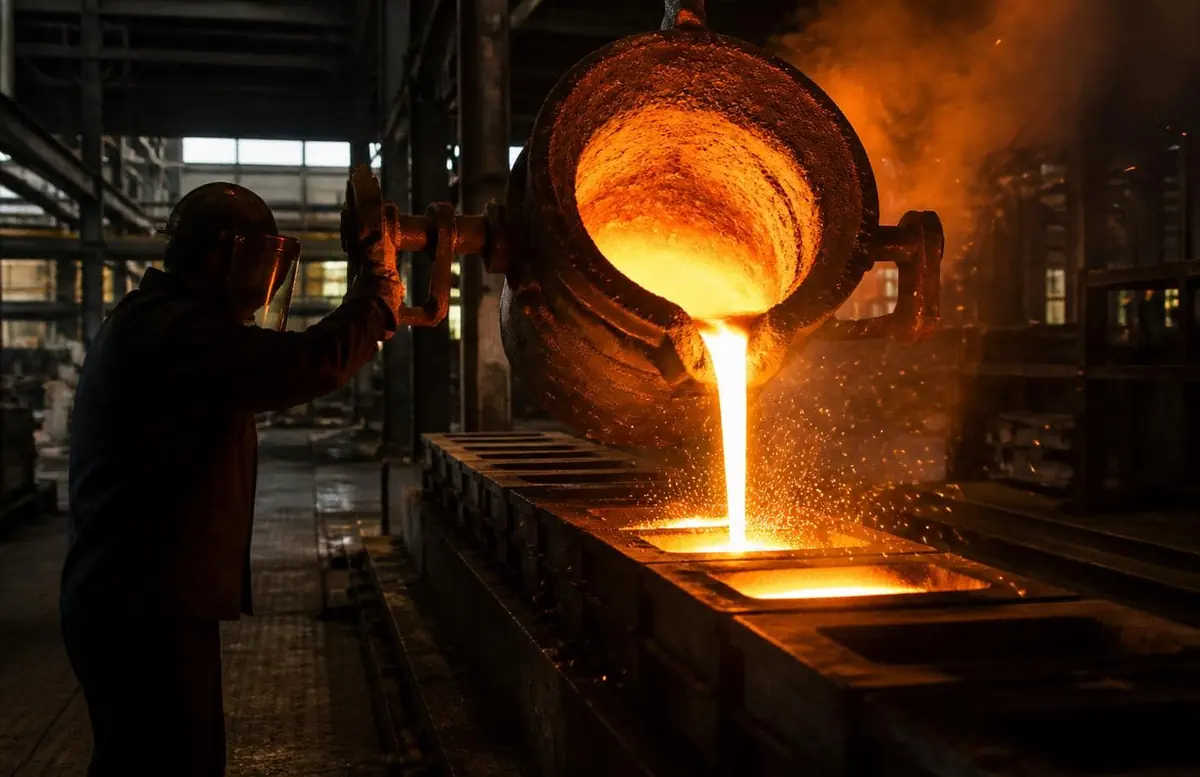
- The refiner: melting the lot, taking a representative sample, running a proper assay and settling on assayed content rather than estimate — charging a refining fee and returning refined metal or its cash equivalent.
- The market: refined bars or grain re-entering fabrication or investment demand, with no trace of what they used to be.
Each link takes a margin, and each margin is defensible on its own terms — the counter carries fraud risk and holding cost, the consolidator carries transport and insurance, the refiner carries process losses. Stacked, they explain most of the gap between spot and what a seller is offered.
How the metal is tested
Three methods dominate at the buying counter, and their limitations are the reason the chain has as many links as it does.
Touchstone and acid
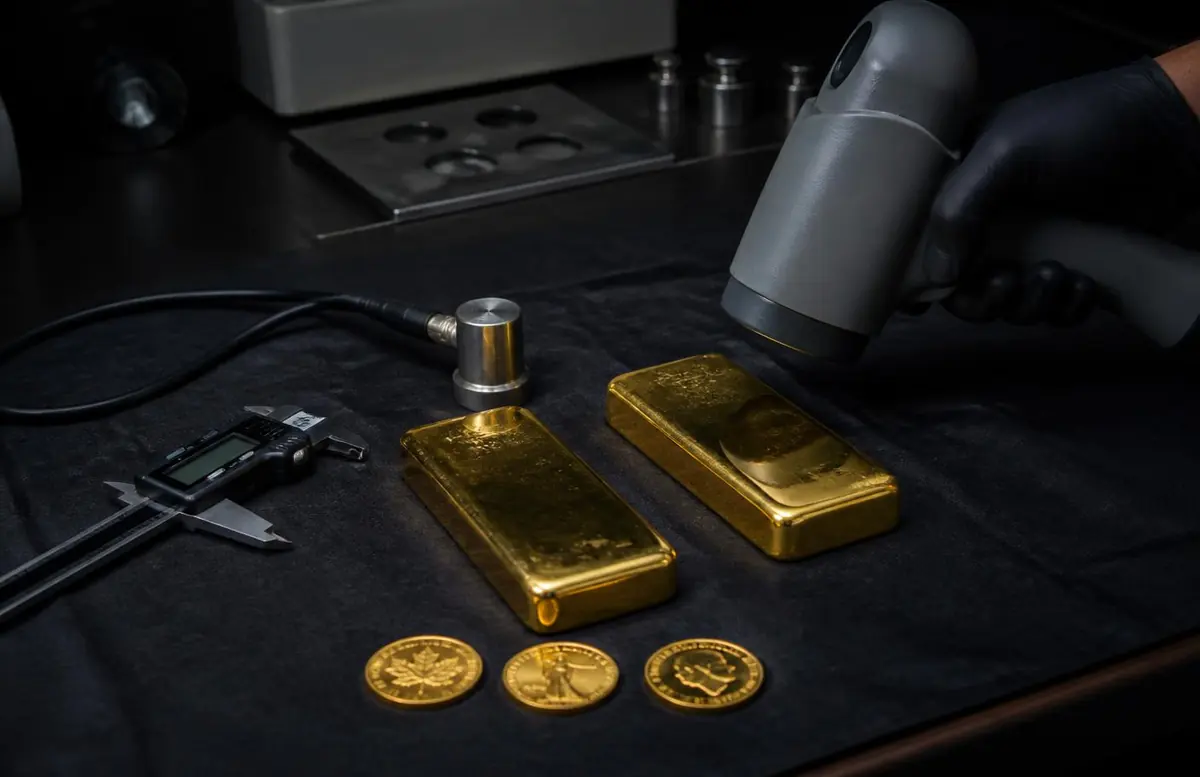
The oldest method still in daily use. The item is rubbed on a fine-grained stone to leave a streak, and graded acids are applied to the streak: an acid formulated for 14k will dissolve a 9k streak and leave an 18k one intact. It is cheap, fast, destructive only to a microscopic smear, and reads only the surface — which is precisely how plated items pass it.
X-ray fluorescence
A handheld XRF unit excites the surface with X-rays and reads the characteristic emission of each element present, returning a full alloy composition in seconds without marking the piece. It has become standard at any serious buying operation. Its weakness is the same as the touchstone's: penetration is measured in microns, so a sufficiently thick gold plate over tungsten or brass will read as solid gold.
Fire assay
The reference method, unchanged in principle for centuries and still the arbiter in any dispute. A sample is melted with lead and a flux; the lead collects the precious metals and is then oxidised away in a porous cupel, leaving a bead that is weighed, parted in acid and weighed again. It is destructive, slow and accurate to a few parts in ten thousand. Refiners settle on it. Counters cannot.
Where the value can hide
The buying chain is optimised for melt value, and it is systematically bad at recognising anything else. A signed piece from a named maker, a period setting, a hallmark from a defunct assay office, a stone worth more than the metal holding it — all of these are worth more intact than scrapped, and none of them survive a transaction priced purely on grams.
This is the most consequential asymmetry in the trade, and it does not require anyone to behave dishonestly. A counter buying on weight will offer weight. The seller who has not had a second opinion has no way of knowing whether the object in front of them belongs in the melt or in an auction catalogue.
The refining step
Once a lot reaches a refiner the metallurgy is straightforward and very old. The Miller process bubbles chlorine gas through the molten alloy; base metals and silver form chlorides that separate as slag or volatilise, leaving gold at around 99.5% purity in a few hours. Where higher purity is required, Wohlwill electrolysis follows: the Miller-grade gold is cast as an anode and redeposited on a cathode from a chloroauric acid electrolyte, reaching 99.99% or better.
What emerges has no memory. A bar refined from a tonne of broken chain is chemically and legally identical to one refined from mine concentrate. Every claim made about 'recycled gold' in a marketing context is therefore a claim about paperwork — the documented chain of custody proving where the input came from — and not about any property that could be measured in the metal itself.
Selling well
The practical advice that follows from all of the above is short. Know the contained value before you arrive. Get more than one offer, including at least one from a specialist refiner rather than only from a high-street counter. Have anything with a maker's mark, an unusual hallmark or a significant stone looked at separately before it is weighed as scrap. Watch the testing and watch the scale. And treat the percentage of spot you are offered, rather than the headline figure on the window, as the only number that describes the deal.
The price a seller actually receives
There is one gold price on a screen and several different prices at a counter, and the gap between them is where the scrap trade earns its living. A refiner quotes against the London benchmark and deducts for assay, refining, transport and its own margin. A wholesale buyer deducts again. A high-street shop deducts once more, and often quotes on an assumed karat rather than a measured one.
- Benchmark price — the reference for pure metal, per troy ounce or per gram, before anything is subtracted.
- Fineness adjustment — 9-karat material is 37.5 percent gold, 18-karat is 75 percent, 22-karat is 91.6 percent; stones, clasps and springs are dead weight.
- Refining charge — a per-lot or per-gram fee that falls sharply with parcel size, which is why aggregators exist.
- Buyer margin — the discretionary part, and the one that varies from a few percent at a wholesale desk to a third or more at a pop-up cash-for-gold counter.
A seller with two hundred grams of mixed jewellery has no realistic route to a refinery gate price, because refiners work in kilogram lots and will not open an account for a single parcel. The chain of intermediaries is not a scam; it is the mechanism by which small, heterogeneous parcels become the uniform, assayed feed a refinery needs. What varies is how much of the spread each link takes, and how clearly it is disclosed.
How the trade tests before it pays
Every buyer in the chain solves the same problem: establishing fineness quickly, cheaply and without destroying the item. The methods form a ladder, and where a buyer sits on it tells you how seriously they take the risk.
- Acid testing on a touchstone — fast, cheap, destructive to a tiny streak, and easily defeated by heavy plating over base metal.
- Handheld XRF — non-destructive elemental analysis in seconds, but it reads only the surface, so a thick gold cladding still fools it.
- Specific gravity — catches most tungsten-free density fraud on solid items, useless on anything hollow or set with stones.
- Ultrasonic and conductivity meters — probe below the surface and are the practical defence against clad bars.
- Fire assay — the destructive referee method, accurate to a few parts per ten thousand, and the basis on which refineries actually settle.
Recycled supply is the market's shock absorber
Mine output responds to price on a timescale of years, constrained by permits, capital and ore bodies. Recycled supply responds in weeks. When the price spikes, counters fill, and the additional metal reaching refineries damps the move; when the price falls, the flow dries up almost immediately. In some years recycling has supplied close to a third of total gold coming to market, without a single new hole being drilled.
That elasticity has a social dimension that the aggregate figures hide. Distress selling rises with unemployment, currency stress and medical costs, so the recycled series carries a signal about household balance sheets in the major consuming markets — and one of the more reliable indicators of hardship in a gold-holding economy is a sustained rise in scrap flow at a falling price.
Where scrap comes from, and where it goes
The geography of the scrap trade mirrors the geography of gold ownership rather than the geography of mining. India, the Middle East, Turkey and East Asia — regions with deep cultural traditions of holding wealth in jewellery — supply the largest volumes, because households there hold gold in forms designed to be reworked rather than kept as static heirlooms. A family upgrading a design for a wedding will routinely trade in the old pieces against the new, so a meaningful share of what looks like consumer demand in these markets is really recycling in another guise.
Refined output then flows toward the manufacturing centres — Italy, India, Turkey and increasingly Vietnam and China for mass fabrication, Switzerland for bars serving investment demand — largely indifferent to whether the feedstock was mined or melted down. A small number of large-scale refiners, several of them Swiss and several Emirati, dominate the volume that moves internationally, which concentrates both the efficiency gains and the compliance burden in a handful of firms whose sourcing standards effectively set the norm for the rest of the chain.
The informal layer
Beneath the licensed refiners sits an informal and semi-formal layer that handles a meaningful share of global scrap, particularly in South and Southeast Asia and parts of West Africa, where small melters operate with minimal documentation and metal changes hands multiple times before it reaches a facility capable of exporting refined bars. This layer is where most of the trade's provenance problems originate, because a gram of gold melted twice with no paperwork between melts is, for practical purposes, untraceable regardless of what it started as.
- Household jewellery trade-ins at the point of a new purchase — the largest single source by volume in gold-holding cultures.
- Industrial and electronic scrap, including circuit boards, connectors and plating baths, recovered by specialist e-waste refiners.
- Dental gold, still a meaningful niche source in several developed markets with ageing populations.
- Investment coin and bar melt, which rises and falls sharply with price and interest-rate cycles rather than with cultural patterns.
Fraud, laundering and the compliance response
Because refined gold loses all trace of its origin, the metal has long been attractive as a laundering vehicle for illicitly mined or stolen material — conflict gold moved across borders as jewellery or low-grade doré, blended with legitimate scrap at a small melter, and re-emerging as an assayed bar with no link to its source. The Dubai and Democratic Republic of Congo route documented by researchers over the past decade is the best-studied example, though the mechanism generalises to any jurisdiction with weak import controls and a refining capacity willing to ask few questions.
“You cannot smell where a bar of gold has been. That is the entire reason the paperwork industry around refining exists — because the metal itself will never tell you.”
Policy and the push for conflict-free sourcing
Regulatory pressure has increased steadily since the Dodd-Frank Act's 2010 conflict minerals provisions required US-listed manufacturers to disclose sourcing from central African conflict zones, a rule since narrowed but influential well beyond its own jurisdiction because it pushed downstream buyers to demand documentation from refiners who had never previously been asked for it. The EU's own conflict minerals regulation, in force since 2021, extends comparable due diligence obligations to importers of gold above defined volume thresholds.
The practical effect on an ordinary seller handing over a broken chain is close to nil — the obligations bind refiners and large importers, not the counter. Its effect further up the chain has been to make traceable, audited scrap a marketable attribute in its own right, with some jewellery brands now marketing 'certified recycled' gold at a premium over unverified scrap-sourced metal, even though, as established earlier in this piece, the refined product itself is chemically identical either way.
~1,100–1,300t
Approximate annual global recycled gold supply in recent years
2010
Dodd-Frank conflict minerals provisions enacted
2021
EU conflict minerals regulation entered into force
LBMA
Body maintaining the Good Delivery accreditation refiners depend on
The pawnbroking layer, and why it behaves differently
Pawnbroking sits alongside outright scrap sale as a second route by which household gold enters the financing system, and it is worth separating from the scrap trade proper because the economics run in the opposite direction. A pawn loan is secured against the item's melt value but the customer is not selling; they are borrowing, typically at monthly interest rates that reflect both the short-term, uncollateralised-elsewhere nature of the loan and the pawnbroker's own cost of holding and insuring inventory. Only unredeemed items — a minority in most licensed markets, though the proportion rises sharply during periods of economic stress — eventually convert into scrap and enter the same refining chain described earlier in this piece.
This distinction matters because pawnbroking volumes are a leading indicator that behaves differently from the outright scrap-selling data usually quoted. Loan volumes rise with short-term liquidity stress even when the gold price is flat or falling — precisely the environment in which outright scrap selling tends to be least attractive, because sellers are reluctant to give up gold permanently at a depressed price. In several large gold-holding economies, pawned-gold lending has become a formal, regulated consumer credit channel in its own right, with dedicated licensing regimes, interest rate caps and, in some markets, participation by mainstream banks rather than only specialist pawnbrokers — a sign of how large and how mainstream the practice of borrowing against household gold has become.
Recovering gold from electronics
A meaningful and growing share of recycled supply now comes from sources with no jewellery history at all. Printed circuit boards, connector pins, memory modules and the plating on countless small components all carry gold, chosen for its corrosion resistance and reliable conductivity in contacts that must keep working after years of thermal cycling. The concentration per device is tiny — a smartphone contains on the order of tens of milligrams — but the aggregate volume of discarded electronics is enormous, and the recoverable grade in a well-sorted batch of circuit boards can exceed that of a productive gold ore by a wide margin, which is the reason specialist e-waste refiners exist as a distinct segment from the jewellery-focused scrap trade.
Recovery at this end of the chain uses much the same underlying chemistry — smelting or leaching followed by electrolytic refining — but the front end differs substantially, because boards must first be shredded, sorted and often pre-treated to concentrate the metal-bearing fraction before conventional refining becomes economic. Formal e-waste recycling operates under increasingly strict environmental permitting in developed markets, reflecting the toxic residues in circuit board substrates and solder. A large share of global electronic waste, however, is exported to and processed in facilities with far weaker environmental controls, where open burning and acid leaching without containment recover the gold at serious cost to workers and local ecosystems — a parallel, less-discussed version of the informal-sector problem this piece describes in the jewellery scrap chain.
What a smarter seller actually does differently
Set against everything above, the practical difference between a seller who does well out of the scrap trade and one who does not comes down to a handful of habits rather than any special expertise. The first is separating decisions: deciding whether a piece is worth more intact, sold as scrap, or pawned rather than sold, before any conversation about price begins. The second is insisting on a transparent test performed in view, with the weight and assumed fineness recorded before any percentage is discussed. The third is treating a first offer as exactly that — a first offer — and obtaining at least one comparison, ideally from a buyer operating closer to the refinery end of the chain rather than only from the most convenient high-street counter.
None of this requires specialist knowledge beyond what has already been set out here: the arithmetic of contained gold, the difference between a surface test and a destructive assay, and an awareness that melt value is a floor rather than the only possible outcome. The margins that make the scrap trade profitable at every link are largely a function of information asymmetry between buyer and seller, and that asymmetry narrows considerably the moment a seller arrives already able to do the sums the buyer is doing.
The trade is unlikely to shrink, and if anything the compliance layer around it will keep thickening as regulators extend due diligence obligations further down the chain toward smaller refiners and second-tier importers who have so far operated with the least scrutiny. As long as gold remains both a store of value and a fabricated good worn on the body, there will be a steady stream of pieces that fall out of fashion, out of fit or out of favour, and a parallel stream of financial pressure that turns a drawer of old jewellery into cash within the hour. What has changed, gradually and unevenly, is the amount of scrutiny applied to where that gold goes next — from a largely undocumented cash trade a generation ago to a chain in which the largest refiners now face real consequences for getting provenance wrong. The counter at the front of the shop looks exactly as it did decades ago. Everything behind it has been quietly rebuilt.
Frequently asked
Questions readers ask
- How much should I get for scrap gold?
- Work out the contained gold first: weight in grams multiplied by fineness — 0.750 for 18k, 0.585 for 14k, 0.375 for 9k — multiplied by the spot price per gram. That is the theoretical maximum. What you are offered is a percentage of it, and the percentage varies enormously between a high-street buyer and a refiner taking volume. Nothing here is financial advice.
- Why do buyers pay less than the spot price?
- Because spot is the price of refined, deliverable metal, and scrap is none of those things yet. Between the counter and a good delivery bar sit testing, transport, insurance, refining losses and refining charges, plus a margin at each intermediary. A buyer paying spot would be operating at a loss.
- Is recycled gold better for the environment?
- It avoids the extraction impacts of new mine supply, which is a real difference. The claim is weaker than it looks in aggregate, though: recycled supply largely responds to price rather than displacing mine production one for one, and a bar refined from scrap is physically indistinguishable from one refined from concentrate. The meaningful part of any 'recycled gold' claim is the chain-of-custody documentation behind it.
- How do I know a buyer's test is honest?
- Ask which method is being used and watch it. Acid touchstone testing and handheld XRF are both surface methods and both should be performed in front of you, with the scale visible and zeroed. Get the weight and the assumed fineness written down before any discussion of price. Reputable operations do this as standard.
- What happens to my gold after I sell it?
- It is consolidated into lots, sold on to a refiner, melted, sampled and assayed properly, then refined — typically by the Miller chlorination process to remove base metals, followed by Wohlwill electrolysis for high purity. The output is cast into bars or grain and re-enters the market indistinguishable from any other refined gold.
- Should I sell jewellery for scrap or try to sell it intact?
- Get it valued as a piece before you accept a scrap quote, especially if it carries a maker's mark, an old hallmark, an unusual design or a stone of any size. Melt value is a floor, not a ceiling — auction houses, specialist dealers and vintage jewellers routinely pay well above scrap for pieces with design or maker interest that a weight-and-fineness quote simply cannot see.
- Does 'certified recycled' gold jewellery actually mean anything?
- It means the refiner can document that the metal's declared origin is scrap rather than newly mined ore, verified through a chain-of-custody audit trail. It does not mean the metal is physically different — refined gold carries no trace of its history. The value of the certification lies entirely in the paperwork behind it, which is genuinely harder to fake than it once was under current due diligence rules.