Environment
After the Cyanide
Every ounce of mined gold leaves behind roughly a tonne of processed rock and the water that carried it. What happens to that material after the last shift is the part of the industry with the longest timeline and the least coverage.
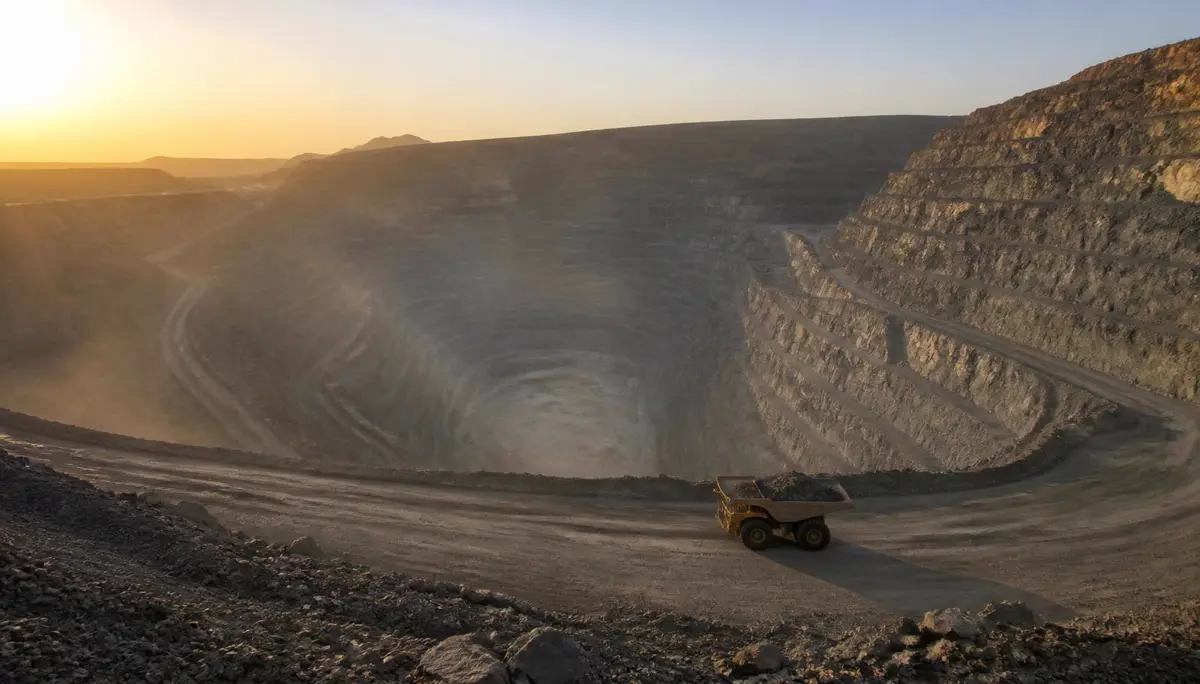
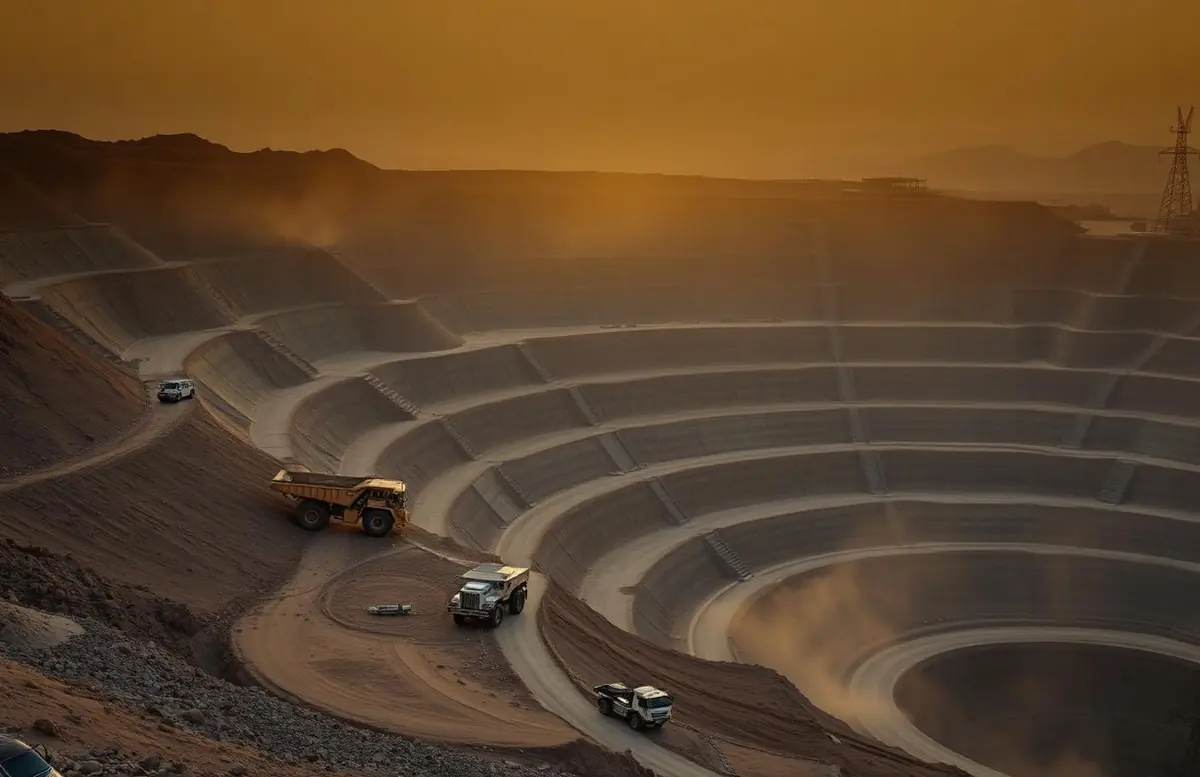
A large open-pit gold mine is, in physical terms, a machine for relocating a mountain. The gold is the smallest thing that leaves the site. At a grade of one gram per tonne — respectable for a bulk-tonnage operation — recovering a single ounce means processing roughly thirty tonnes of rock. Everything else stays: crushed, ground to the consistency of flour, mixed with water and reagents, and pumped into an impoundment that will outlast the company that built it.
The industry's public story is about grade, cost and production guidance. The story with the longest timeline is about what happens to that impoundment for the next several centuries, and it is governed by three separate technical problems that are frequently confused with one another.
Problem one: the reagent
Cyanide leaching has been the industry's core process since the 1890s, and its persistence is a matter of arithmetic rather than affection. Gold is chemically stubborn; very few reagents will dissolve it at all, and fewer still will do so without also dissolving everything around it. A dilute alkaline cyanide solution forms a stable soluble gold complex, leaves most of the host rock alone, and works at concentrations that are a small fraction of a percent.
Its hazards are real and they are operational. Cyanide is acutely toxic at low doses, and the historical incidents that shaped public opinion — the Baia Mare spill into the Tisza and Danube in 2000 being the defining European case — involved failure of containment rather than the chemistry misbehaving. The industry's response was the International Cyanide Management Code, a voluntary certification scheme covering transport, storage, dosing, monitoring and decommissioning, audited by third parties. Voluntary schemes have obvious limits, but the Code did standardise practice at signatory operations in a way regulation alone had not.
Problem two: the acid
Acid mine drainage is the industry's genuine multi-century liability, and it needs no reagent at all. Where the ore body contains pyrite or other sulphides — which gold deposits very often do — exposing that material to oxygen and water starts an oxidation reaction that produces sulphuric acid. The acid lowers the pH of any water passing through, and low-pH water mobilises metals: iron, aluminium, copper, arsenic, cadmium, depending on the geology.
Two features make it intractable. First, the reaction is catalysed by naturally occurring bacteria that thrive in exactly the conditions it creates, so it accelerates itself. Second, it does not stop. There are Roman and medieval mine workings in Europe still discharging acid water two thousand years on. A modern site's water treatment plant is therefore not a decommissioning task with an end date; it is a perpetual obligation, and pricing perpetuity into a mine plan with a fifteen-year life is a problem no accounting standard handles gracefully.
Problem three: the wall
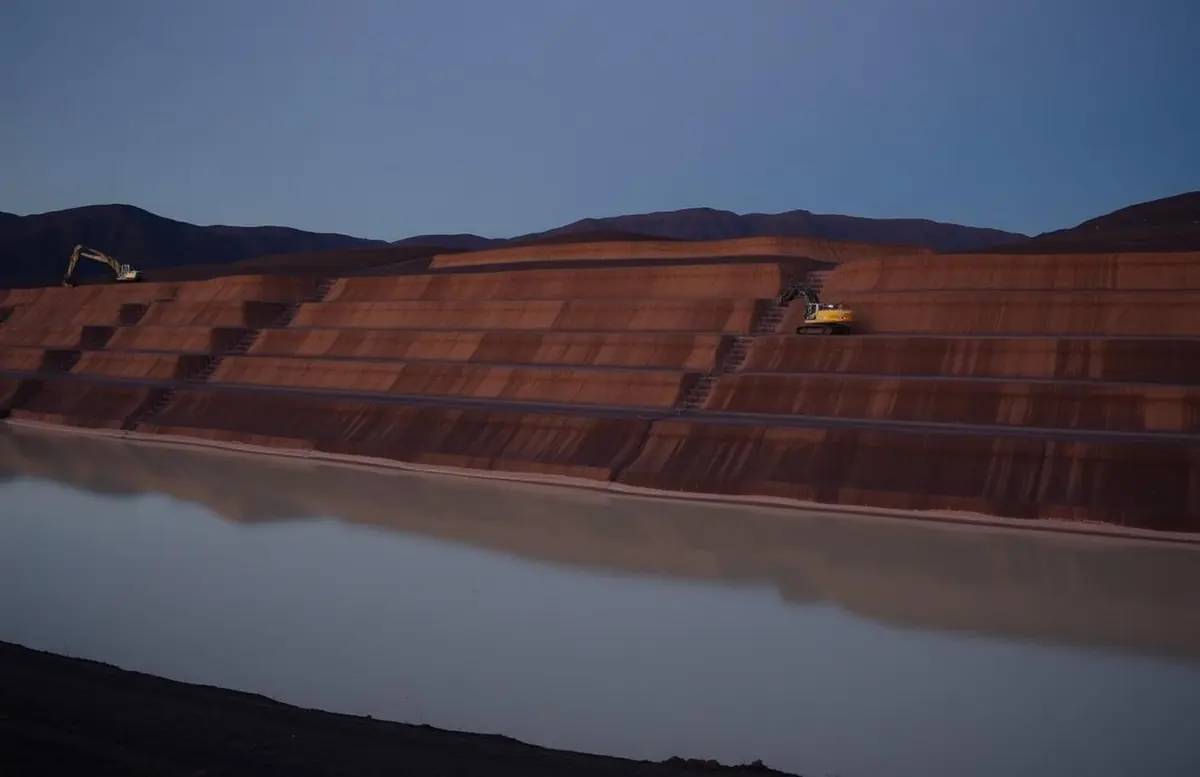
Tailings are stored behind embankments, and how those embankments are built determines how they fail. There are three basic methods, and the distinction is not academic.
- Downstream construction raises each successive lift on the outer, dry side, so the growing wall always rests on engineered fill. It is the most stable and the most expensive.
- Centreline construction splits the difference, raising vertically over the crest.
- Upstream construction raises each lift onto the previously deposited tailings inside the impoundment — cheap, fast, and founded on saturated fine material that can lose strength suddenly under seismic or rapid loading.
The catastrophic failures of the past decade have concentrated in upstream structures. Brazil banned new upstream dams and mandated decommissioning of existing ones after Brumadinho in 2019; Chile had prohibited them decades earlier following seismic failures. The Global Industry Standard on Tailings Management, published in 2020 by the ICMM, UNEP and the PRI, set out consequence-based design requirements and independent review — the first serious attempt at a cross-industry standard, and one whose adoption remains uneven outside the major listed producers.
Who pays, and when
Modern permitting requires financial assurance: the operator posts a bond, letter of credit or trust fund calculated to cover closure and post-closure care if the company disappears. The theory is sound. The practice depends entirely on whether the estimate was honest and whether the instrument is actually liquid.
Two failure modes recur. The first is understatement, where closure cost estimates assume best-case water chemistry and a short aftercare period, leaving the bond a fraction of the eventual bill. The second is self-bonding, where a company's own balance sheet stood as security — an arrangement that works precisely until the company is insolvent, which is the only circumstance in which it is needed. Jurisdictions have been retreating from self-bonding since the coal bankruptcies of the mid-2010s made the flaw unmissable.
What good closure looks like
The best-run closures share a shape. Reagent circuits are rinsed and neutralised before the plant is stripped. Tailings surfaces are capped to exclude oxygen and shed water, or kept saturated to achieve the same end from the opposite direction, because both starve the sulphide oxidation reaction of what it needs. Landforms are regraded to drain the way the surrounding country drains rather than into a pit lake nobody will manage. Native vegetation is re-established with species that will hold the surface without irrigation. Water monitoring continues for decades, funded by a trust rather than by an operating budget that no longer exists.
It is expensive, unglamorous and — because it happens after the revenue stops — structurally difficult to fund from within the project that created the need for it. That structural mismatch, more than any question about cyanide, is the real environmental story of gold mining, and it is the one that determines what a district looks like a hundred years after the last pour.
What closure actually costs, and who ends up paying
A closure plan is a financial instrument as much as an engineering document. Regulators in most established jurisdictions require an operator to post security — a bond, a letter of credit, an insurance product or cash in trust — sized to the estimated cost of rehabilitating the site if the company disappears tomorrow. The theory is that the public is never left with the bill. The practice depends entirely on whether the estimate was honest and whether the instrument is callable.
Two failure modes recur. The first is an estimate built on optimistic assumptions: that the pit lake will stabilise chemically without treatment, that revegetation succeeds on the first attempt, that the water-treatment plant runs for fifteen years rather than in perpetuity. The second is a corporate one, where an ageing asset is sold down a chain of progressively smaller operators until it sits inside an entity with no balance sheet behind the bond. When that entity fails, the security covers a fraction of the work and the state inherits the rest.
This is why the closure provision buried in the notes of an annual report is one of the more informative numbers in mining. It is a discounted estimate of a long-dated obligation, and the discount rate, the assumed treatment horizon and the escalation assumptions all move it substantially. A provision that has not risen in a decade, on a site whose water chemistry has deteriorated, is telling you something.
Water is the obligation that does not end
Everything else about closure has an end date. Earthworks finish, covers are placed, buildings come down, seed takes. Water treatment can outlive the company, the regulator and the mining code that authorised the project, because acid rock drainage is a self-sustaining reaction: sulphide minerals exposed to air and water generate acid, the acid mobilises metals, and the process continues for as long as there is sulphide and oxygen.
- Passive systems — constructed wetlands, limestone drains and biochemical reactors, cheap to run but limited in the loads and chemistries they can handle.
- Semi-passive systems — periodic reagent dosing with minimal staffing, a common compromise for sites with modest ongoing loads.
- Active treatment — a staffed plant with pumps, reagents and sludge disposal, which is effective and carries a permanent operating cost.
- Source control — covers, backfill and subaqueous disposal that limit oxygen ingress in the first place, the only approach that reduces the obligation rather than managing it.
The engineering hierarchy is unambiguous: money spent on source control during operations is worth far more than money spent on treatment afterwards, because it shrinks the perpetual liability rather than servicing it. The commercial incentives point the other way, since source control is a cost during the years the mine is generating revenue and treatment is a cost after it has stopped.
The afterlife that works
Successful repurposing exists, and it shares a pattern: the second use was designed in before the first one ended. Pumped-hydro storage in a pair of pits at different elevations, data centres using the cold water of a flooded working, industrial parks on a rehabilitated plant site, tourism and heritage on historic underground workings, and — increasingly — reprocessing of old tailings whose grade beats a modern greenfield discovery.
What does not work is deciding at the closure meeting. By then the workforce has dispersed, the local supply chain has folded, the infrastructure is being salvaged and the community's negotiating position has evaporated. The economics of a mine's afterlife are set during its most profitable years, which is exactly when nobody wants to discuss them.
Case studies: failure and slow recovery
The Baia Mare spill in Romania in January 2000 remains the reference case for cyanide-specific failure. A tailings dam holding gold-processing waste overtopped after heavy snowmelt and rain, releasing an estimated 100,000 cubic metres of cyanide-contaminated water into the Someș, Tisza and eventually the Danube, killing large stretches of fish across three countries. The technical cause was inadequate dam freeboard and poor water balance management during an unusually wet season, not an exotic chemical failure — which is precisely why the industry response focused on management systems, culminating in the International Cyanide Management Code, rather than on banning the reagent outright.
Brumadinho, Brazil, in January 2019 illustrates the structural failure mode instead. An upstream-raised iron ore tailings dam liquefied without any unusual rainfall trigger, killing 270 people in minutes as the wave of tailings overran a company cafeteria at lunchtime. Though the mineral was iron rather than gold, the dam-construction lesson applies directly across hard-rock mining, and it is the disaster most often cited in the gold industry's own current risk disclosures. Within a year, the Global Industry Standard on Tailings Management had been published, backed by the world's largest mining companies precisely because Brumadinho made self-regulation without independent review commercially indefensible.
Recovery stories exist too, and they are less reported. The Wheal Jane mine in Cornwall, closed since 1991, still discharges acidic, metal-laden water from workings first dug in the eighteenth century; a passive wetland treatment system built after a 1992 pollution incident has run continuously since, funded by the UK government because no solvent responsible party remains. It is not a solved problem — it is a managed one, in perpetuity, at public expense, which is the fate awaiting a meaningful share of the mines being permitted today.
Who underwrites the risk
Insurers and lenders sit closer to this problem than most coverage acknowledges. Tailings dam failures are now explicitly underwritten risks, with specialist engineering audits forming part of the due diligence for project finance and for the liability cover mining companies carry. After Brumadinho, several major insurers began requiring independent tailings review board sign-off as a condition of renewal, effectively exporting a discipline that voluntary industry codes had not achieved on their own.
- Project lenders now routinely require an Independent Tailings Review Board with named, rotating external experts rather than a single consultant on retainer.
- Equator Principles banks apply environmental and social risk categorisation that can require closure and rehabilitation plans before first disbursement, not before closure.
- Political risk insurers increasingly price legacy liability separately from operating risk, reflecting how differently the two loss profiles behave over time.
- Credit rating agencies have begun treating undisclosed or underfunded closure provisions as a governance red flag rather than a purely environmental one.
Communities, consent and the closure table
Closure planning has historically been an engineering conversation conducted without the people who will live beside the site for the following century. That has begun to change, unevenly, as free, prior and informed consent frameworks — most fully developed around indigenous land rights in Canada and Australia — extend from the permitting stage into closure. A rehabilitated landform designed without local input regularly fails to match the land use the community actually wants, whether that is grazing, cultural sites, water access or nothing at all beyond being left alone.
“We were consulted on the mine opening for eighteen months and on its closing for an afternoon. The afternoon is the part we have to live with.”
Where it has worked well, closure committees with standing community representation are established at permitting stage and remain in place through operations and aftercare, with access to the same water monitoring data the regulator sees rather than a summarised annual report. That transparency does not eliminate conflict over land use after mining, but it removes the more corrosive complaint that decisions were made entirely elsewhere.
2000
Year of the Baia Mare cyanide spill, Romania
2019
Year of the Brumadinho dam failure, Brazil
270+
Lives lost at Brumadinho
2020
Publication of the Global Industry Standard on Tailings Management
The search for a cyanide-free process
Cyanide's dominance has not gone unchallenged inside the industry itself, and it is worth being precise about why the alternatives have not displaced it despite decades of genuine research effort. Thiosulfate leaching, developed most extensively for ores where cyanide performs poorly because of preg-robbing carbonaceous material, dissolves gold via a copper-ammonia catalysed reaction and has been used commercially at a small number of sites, most notably Barrick's Goldstrike operation in Nevada. It avoids the acute toxicity profile of cyanide but introduces its own complexities: the chemistry is less forgiving of variations in ore mineralogy, reagent consumption can be higher, and the downstream recovery circuit — typically resin-in-pulp rather than the carbon-in-leach standard built around cyanide — requires different capital and different operator expertise.
Glycine-based leaching, championed more recently by Australian research groups and now in pilot and early commercial use, offers a genuinely lower-toxicity reagent that is biodegradable and, notably, can be blended with reduced cyanide concentrations to improve recovery while cutting overall reagent hazard. Chloride-hypochlorite leaching, an older chemistry, sees intermittent commercial interest whenever cyanide alternatives are in vogue, but corrosion of processing equipment has limited its uptake. None of these processes has achieved anything close to cyanide's combination of selectivity for gold, tolerance of varied ore mineralogy, decades of accumulated engineering experience and, critically, unit cost. A brownfield conversion of an existing cyanide circuit to an alternative chemistry is also a multi-hundred-million-dollar capital decision that few operators will make voluntarily while cyanide remains legal and insurable.
The more consequential shift, in practice, has been procedural rather than chemical: dosing control, containment engineering and destruction of cyanide in tailings before discharge — using hydrogen peroxide, sulphur dioxide-air or natural degradation in lined ponds — have improved substantially since the Cyanide Code's introduction, reducing the residual concentration reaching the environment even where the underlying reagent has not changed. Regulators in several jurisdictions now mandate weak-acid-dissociable cyanide limits in tailings discharge that would have been unheard of thirty years ago, and meeting them has done more to reduce cyanide's environmental footprint than any single substitute chemistry has managed.
Reprocessing: mining the mine twice
One of the more counter-intuitive developments in tailings management is that the waste itself has become a resource. Historic tailings, deposited when recovery technology was cruder and cut-off grades were higher, frequently retain gold concentrations that would justify a standalone mining operation today. Reprocessing that material serves two purposes simultaneously: it extracts value that the original operator left behind, and it can — if done properly — reduce the volume and reactivity of the waste that has to be managed in perpetuity, because reprocessed tailings are often deposited in a more stable, better-engineered facility than the original impoundment.
The economics depend heavily on gold price, on the residual grade of the historic material, and on whether the reprocessor also inherits the original site's legacy environmental liabilities as part of the deal — a question that has become a significant point of negotiation in several jurisdictions, since a company willing to reprocess old tailings is sometimes the only realistic route to funding remediation of a site nobody else wants to touch. South Africa's Witwatersrand basin, with over a century of accumulated tailings from the world's deepest gold mines, has become the leading example of this model at scale, with dedicated reprocessing operations extracting both residual gold and, increasingly, uranium as a by-product, while simultaneously reducing the footprint of dumps that had been a source of dust and acid drainage for decades.
Dry stacking and the filtered-tailings alternative
The engineering response most directly aimed at preventing another Brumadinho or Mount Polley is a shift away from wet, dam-impounded tailings altogether. Filtered — or 'dry stack' — tailings management removes most of the water from the tailings stream before disposal, using pressure or vacuum filtration to produce a cake that can be trucked and compacted like engineered fill rather than pumped as slurry behind a wall. Because the resulting stack contains far less free water, the catastrophic failure mode associated with saturated, liquefiable material largely disappears, and the footprint required is typically smaller than an equivalent wet impoundment.
The trade-off is capital and operating cost: filtration equipment for a large-tonnage operation is expensive to install and to run, and the technology has practical tonnage limits that make it more straightforward at smaller and mid-sized operations than at the highest-throughput mines, where wet disposal remains the default despite the risk profile. Even so, several major producers have committed to filtered or thickened tailings for new projects following the Global Industry Standard's publication, and regulators in a growing number of jurisdictions are moving toward requiring it, or requiring justification for not using it, on any new permit application. It is the closest the industry has come to an engineering fix for the structural failure mode rather than a management fix for its consequences.
None of this removes the underlying tension that runs through the whole subject. A filtered tailings stack, a well-funded closure bond and a properly reviewed dam design all cost money during the years a mine is generating revenue, precisely when shareholders and analysts are focused on cash cost per ounce and payback period. The safest, best-engineered approach to closure is rarely the cheapest one available at the time the decision is made, and the industry's own safety record over the past decade shows what happens when that trade-off is resolved in favour of the near term. The regulatory and financial pressure described throughout this piece — tighter permitting, insurer scrutiny, independent review boards, bans on the riskiest construction methods — exists precisely because voluntary good practice, left to compete against quarterly cost guidance, has not consistently won on its own.
Frequently asked
Questions readers ask
- Why is cyanide used to extract gold?
- Because gold in ore is present at parts per million and locked in rock. A dilute alkaline cyanide solution — typically well under 0.05% — dissolves gold selectively into a soluble complex that can be recovered from solution, and it does so at a cost per tonne that no alternative currently matches at scale.
- How long does cyanide persist in the environment?
- Free cyanide in a shallow, sunlit tailings pond degrades relatively quickly through volatilisation, photolysis and biological breakdown, over weeks to months. That is the reason cyanide is rarely the long-term contaminant of concern at a closed site; the metals and the acidity are.
- What is acid mine drainage?
- When sulphide minerals such as pyrite in waste rock or tailings are exposed to oxygen and water, they oxidise and generate sulphuric acid. The acid then mobilises metals from the surrounding rock. Once the reaction is established it is self-sustaining and can continue for centuries, which makes it the single largest long-term liability in hard-rock mining.
- Why do tailings dams fail?
- Most failures trace to construction method, water management or foundation conditions rather than to a single dramatic event. Upstream-raised dams, built by raising the wall onto previously deposited tailings, are the most vulnerable because the foundation is saturated waste that can liquefy under seismic or rapid loading.
- Who pays to clean up an abandoned mine?
- In modern permitting regimes, the operator posts a financial assurance — a bond, letter of credit or trust — sized to the estimated closure cost. Where those instruments were never required, were set too low, or where the operator became insolvent first, the cost falls to the state. Legacy sites predating the modern regime are almost entirely public liabilities.
- Is there a safer alternative to cyanide leaching?
- Thiosulfate, chloride and glycine-based leaching all exist and are used at a handful of operations, usually where the ore chemistry makes cyanide inefficient rather than out of environmental preference. None currently matches cyanide's combination of selectivity, reagent cost and decades of proven engineering across the full range of ore types mined for gold, which is why it remains dominant despite decades of research into replacements.
- Can a former mine site ever be safely reused for housing or farming?
- Sometimes, but it depends entirely on what was processed and how thoroughly the site was capped and tested. Sites with well-managed non-acid-generating waste have been returned to grazing, parkland and even light development. Sites with active acid generation or unstable tailings require ongoing water treatment and monitoring indefinitely, and building on them is generally avoided regardless of how much time has passed.