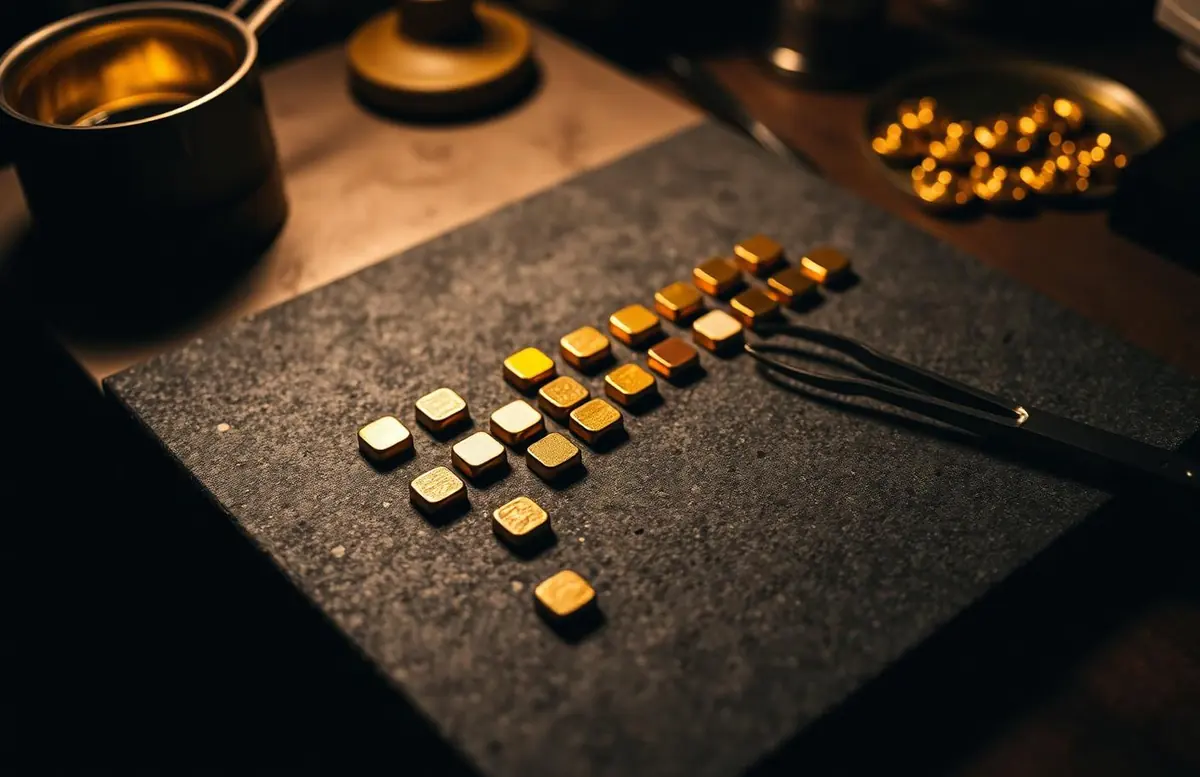
Pure gold is too soft to hold a stone, too soft to hold an edge, and the wrong colour for half the world's taste. Almost everything you own that is gold is a designed alloy — and the design is where the engineering lives.
Divide gold finely enough and it stops being gold-coloured, stops being inert in the way you expect, and starts doing work in places no bullion bar could reach — including the test strip that told you whether you had a virus.
Between the vault and the buyer sits an industry of armoured vehicles, sealed cargo, bonded warehouses and insurance clauses. It rarely makes news, and it is the reason a spot price in London can diverge from a bar in New York.
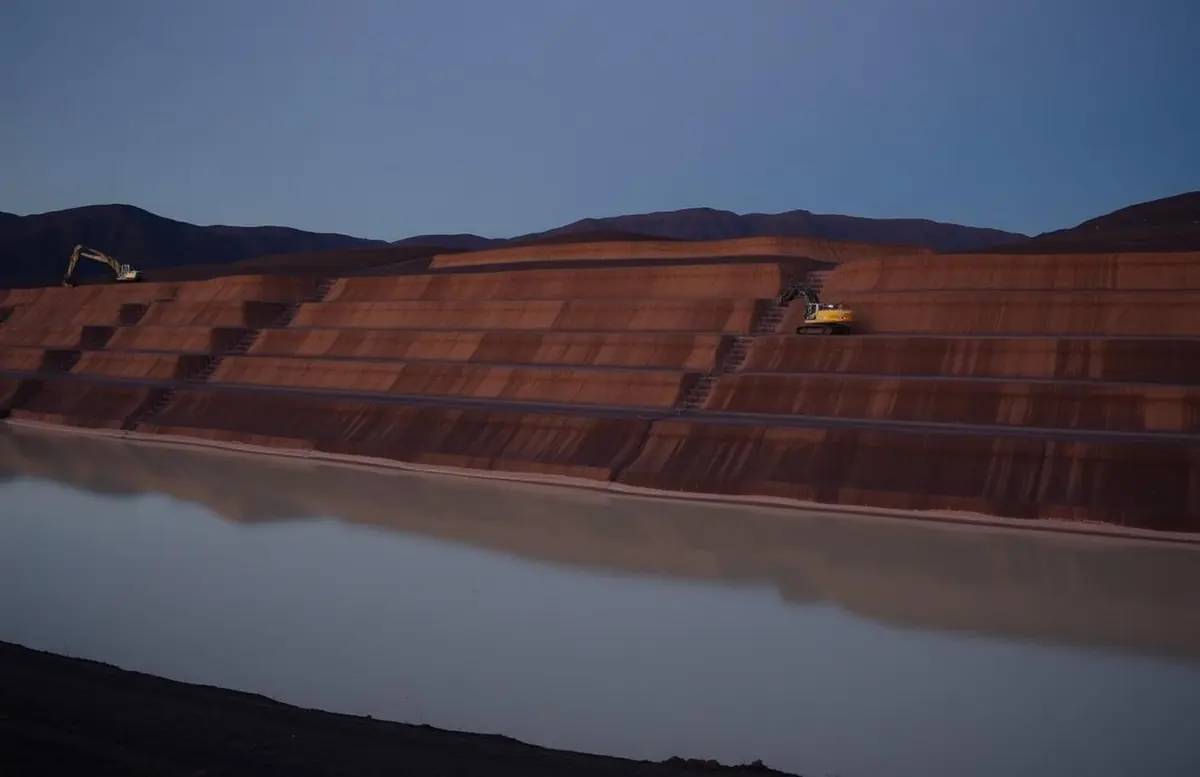
Every ounce of mined gold leaves behind roughly a tonne of processed rock and the water that carried it. What happens to that material after the last shift is the part of the industry with the longest timeline and the least coverage.