Governments report holding roughly 36,000 tonnes of gold — a figure quoted everywhere and verified almost nowhere. Between the published number and the physical bar sits a chain of certificates, custodians and fifty-year-old count sheets. This is an attempt to walk that chain honestly.
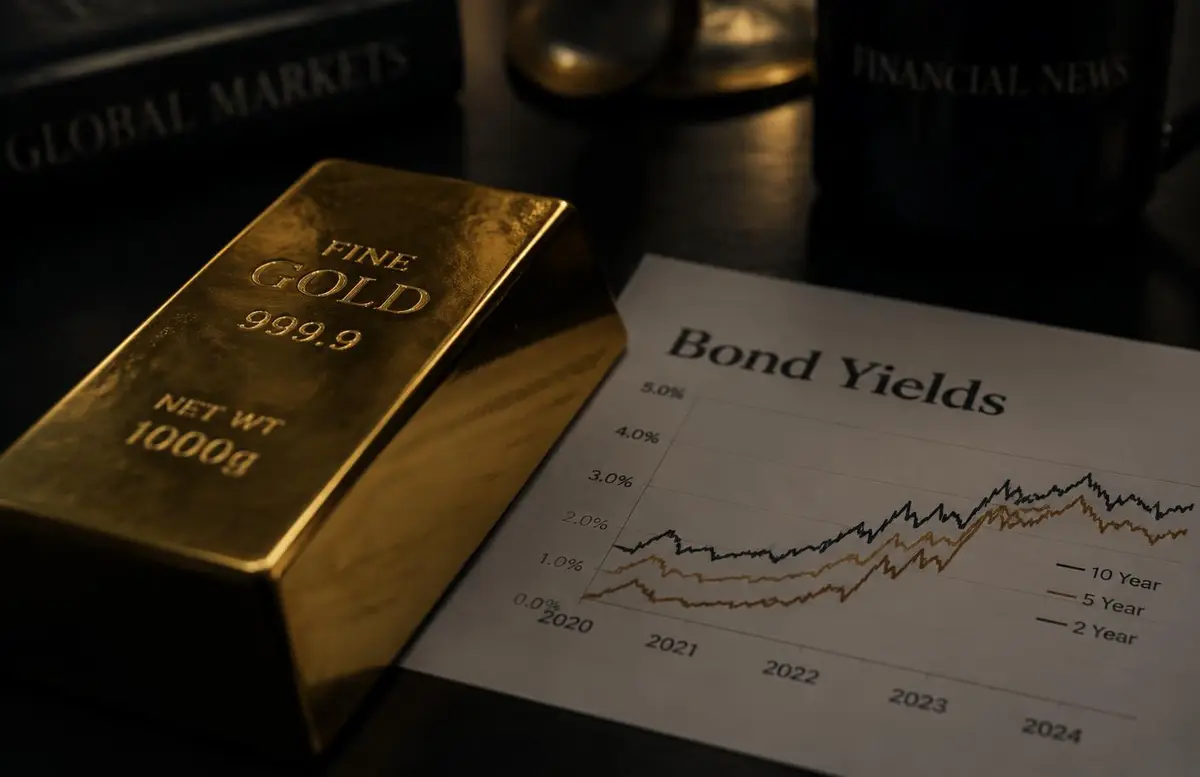
For two decades the gold price could be read off an inflation-linked bond screen. Then, somewhere after 2022, the relationship stopped behaving — and the argument about why has become the most consequential debate in the metal's market.
Beneath the Bank of England and beneath lower Manhattan sit two of the largest concentrations of monetary gold on earth, moved between anonymous compartments by a handful of porters who never touch the metal with bare hands. This is how sovereign gold is actually stored, audited and, occasionally, brought home.
Most of the world's gold exposure is a contract, not a metal. Futures, unallocated accounts and exchange-traded funds each promise gold in a different way — and the differences only become visible when the market stops working.